
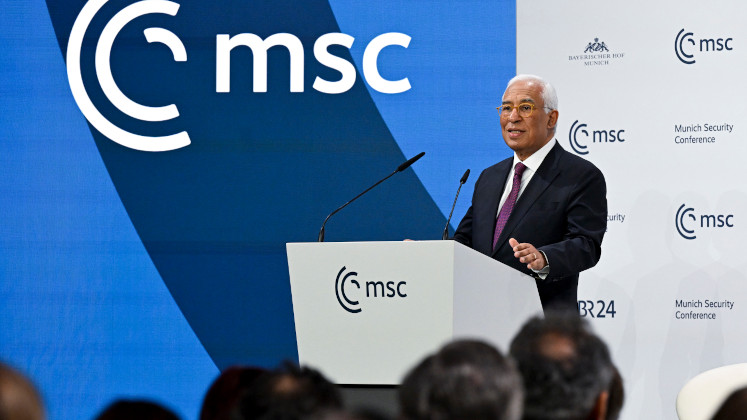
European leaders gathering at this week’s Munich Security Conference are confronting a critical question about the continent’s future as US reliability continues to erode. According to analysts, recent events including President Trump’s threat to seize Greenland have severely strained eight decades of transatlantic partnership, forcing Europe to consider building greater strategic autonomy and independent security capabilities.
The immediate crisis over Greenland has subsided following Trump’s climbdown, though he refused to renounce the underlying ambition. However, the damage to transatlantic relations remains substantial, with public opinion across Europe growing increasingly unfavorable toward the United States. Only a small minority in traditionally Atlanticist countries like Poland and Estonia still view the US as a dependable ally, according to recent polling.
Europe’s Self-Inflicted Security Challenges
Many of Europe’s current security dilemmas stem from decades of strategic miscalculation regarding Russia. Since 2008, European capitals overlooked clear signals of Moscow’s revisionist ambitions, with a blend of economic self-interest and political complacency producing a dangerous misreading of the threat. Even after the 2014 annexation of Crimea, major European governments including France, Germany and Italy continued treating Russia as a difficult partner rather than a strategic adversary.
This misjudgment manifested in three critical ways. First, European leaders consistently underestimated the scope of Russia’s neo-imperial project and its determination to reshape the European security order. Second, deepening energy dependence on Russia effectively helped finance the war against Ukraine while constraining Europe’s strategic autonomy. Third, weak political responses to earlier acts of aggression emboldened Moscow, signaling that escalation costs would be limited.
Shifting Defense Commitments and Persistent Dependencies
European NATO members have made progress on defense spending, with 23 of the Alliance’s 32 members now meeting the 2 percent GDP benchmark. Additionally, NATO allies have pledged to raise defense spending to 5 percent of GDP by 2035. These represent the highest defense commitment levels in NATO’s history, driven partly by Trump’s threats to disengage from the Alliance.
However, Europe’s military reliance on the United States has actually deepened since Russia’s full-scale invasion of Ukraine. According to the Stockholm International Peace Research Institute, European arms imports increased 155 percent between 2020 and 2024 compared with 2015-2019, with the US share rising from 52 percent to 64 percent. Under NATO’s Prioritised Ukraine Requirements List initiative, European governments have pledged over 4 billion dollars for American weapons purchases and committed to spending 1 billion dollars monthly.
Meanwhile, energy dependence has simply shifted rather than disappeared. Europe now sources 60 percent of its LNG imports and 14.5 percent of its oil from the United States, according to Eurostat data. This transition from Russian to American energy reliance creates new vulnerabilities that President Trump has shown willingness to exploit.
European Support for Ukraine Outpaces America
Despite persistent dependencies, Europeans have assumed the lion’s share of Ukraine support since Trump returned to the presidency. Through November 2025, the EU and member states contributed €177.5 billion to Ukraine, far surpassing US contributions when financial and military assistance are combined. Since spring 2025, US financial support has effectively run dry, according to tracking by the Kiel Institute.
France alone now provides approximately two-thirds of Europe’s military intelligence, President Macron stated. Germany’s Rheinmetall is on track to produce 1.5 million artillery shells annually by 2027, eclipsing combined US defense industry output. Nevertheless, Washington’s logistical backbone, intelligence capabilities and industrial scale remain essential for Ukraine’s defense in the short to medium term.
Uneven Mobilization Across the Continent
Threat perceptions and strategic priorities continue to differ significantly across Europe despite increased cohesion during the Greenland crisis. The sense of urgency regarding Russian aggression varies considerably, with only Poland and the three Baltic states allocating more than 3 percent of GDP to defense. France, Italy, Spain and Belgium remain constrained by tighter fiscal conditions, according to European Defence Agency data.
Domestic political polarization further limits governments’ capacity to sustain coherent strategic approaches. The latest Eurobarometer survey shows that while Europeans broadly acknowledge defense as a priority, inflation, rising prices and cost of living concerns continue dominating public attention. Balancing security imperatives with welfare expectations has become one of the EU’s most politically sensitive challenges.
Building European Strategic Autonomy
Analysts argue that Europe needs strategy beyond damage control with the current US administration. A more independent Europe should rest on four priorities: integrating Ukraine within the EU with credible security guarantees, reinforcing strategic cooperation between EU members, the UK and partners like Norway and Turkey, committing to sustained engagement in neighboring regions including the Black Sea and South Caucasus, and deepening partnerships with likeminded actors such as Canada, Japan, South Korea and Australia.
There is no structural reason why a union of 450 million people with an €18-trillion economy cannot defend Ukraine and guarantee its own security, according to the analysis. Europe’s challenge is fundamentally one of mindset, self-confidence and unity rather than purely material capabilities. The erratic approach of the Trump administration has produced significant shifts in Eastern and Northern European thinking, with historically Atlanticist countries increasingly recognizing that Europe must reduce dependence on an unreliable America.
The Munich Security Conference discussions are expected to focus on concrete steps toward greater European defense integration and strategic autonomy. However, authorities have not confirmed specific policy announcements or timelines for implementing enhanced cooperation frameworks among European partners.
