
Bankers have been waiting for something that never seemed to come for the majority of the last 20 years. a wave of mergers within their own sector. Dealmakers on the upper floors of Manhattan towers created pitch books every year, but most of them were never used because of stricter regulations, unstable markets, or the lingering effects of 2008. It appears that their patience is finally running out, and the regulatory landscape is turning in their favor.
You can practically feel the quiet confidence returning as you stroll through Midtown on a December afternoon. The conversations have shifted, but the large investment banks’ lobbies aren’t exactly louder. After years of presenting cost synergies to dubious CEOs, M&A advisers are now receiving follow-up calls. The old script, which emphasizes caution, restraint, and respect for Washington, seems to be being rewritten in real time.
| Snapshot | Details |
|---|---|
| Topic | Regulatory Rollback & U.S. Megabank Mergers |
| Current Climate | Loosening of post-2008 capital requirements |
| Reported Capital Decline | Roughly 4.8% under proposed new rules |
| Key Regulator | Federal Reserve Board of Governors |
| Originating Framework | Dodd-Frank Act of 2010 |
| Industry Sentiment | Optimistic; pent-up M&A appetite after two slow decades |
| Notable Coverage | The Economist, December 2025 — “Wall Street is drooling over bank mergers“ |
| Historical Parallel | The 1990s consolidation wave that produced Citigroup |
| Public Concern | Branch closures, banking deserts, too-big-to-fail |
| Reference Source | International Monetary Fund eLibrary |
There is more than one policy that serves as the trigger. It’s a group of them. Wall Street’s books are being gently impacted by new capital regulations, which are anticipated to lower the required bank capital by nearly 4.8%. Once suspicious of consolidation, regulators now seem open to considering it. Additionally, there is a tendency in politics, especially in this administration, to unleash what officials refer to as economic dynamism. Opponents refer to it as something completely different.
History echoes, but it rarely repeats. The last significant relaxation of regulations occurred in the late 1990s, and the outcome was Citigroup, a massive financial supermarket experiment that tragically collapsed ten years later. Today’s bankers maintain that the comparison is unjust. They claim that risk management is superior. Stress tests are more difficult. Lehman’s lessons are ingrained. They might be correct. Another possibility is that we’ve just forgotten what we were afraid of.
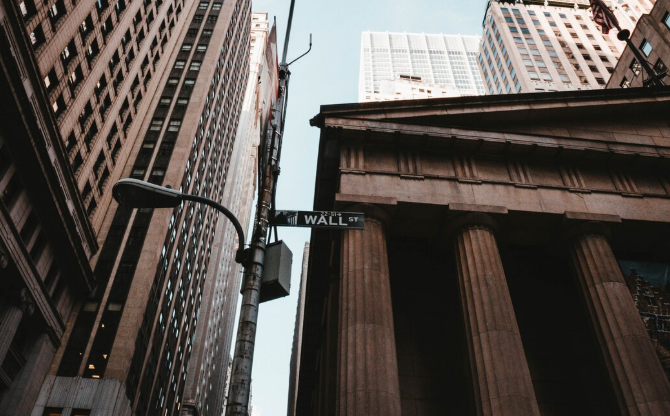
The sheer disarray of American banking is more difficult to ignore. The U.S. landscape still appears remarkably dispersed, with thousands of community banks, regional players, and mid-sized lenders, many of which are struggling with the costs of compliance and the pressure of digital competition, in contrast to Europe, where mergers like CaixaBank and Bankia have already produced national champions. Scale is more important than ever from a purely competitive perspective. From the perspective of the community, things become less clear.
It appears that investors think there is a real upside. The expectation that deals will follow has caused bank stocks to rise for the majority of the year. According to reports, boards are revisiting scenarios that were put on hold during the 2023 regional banking crisis. There is talk of regional powerhouses merging, and there is more subdued conjecture about what the biggest institutions might be permitted to do in the future. Whether and where regulators will draw a line is still up in the air.
The asymmetry in the way these moments play out is difficult to ignore. Gains in profitability for shareholders typically happen quickly, and concerns about branch closures, lending deserts in underprivileged areas, and the gradual deterioration of local banking relationships are only raised later. These trade-offs have long been documented by researchers. Somehow, they are never quite sufficient to halt the cycle.
How aggressive the first movers are and how regulators react when the deals get really big will determine what happens next. On Wall Street, there’s a sense of optimism mixed with a familiar tension, as if we’ve seen this movie before and can’t quite recall how it ends.