
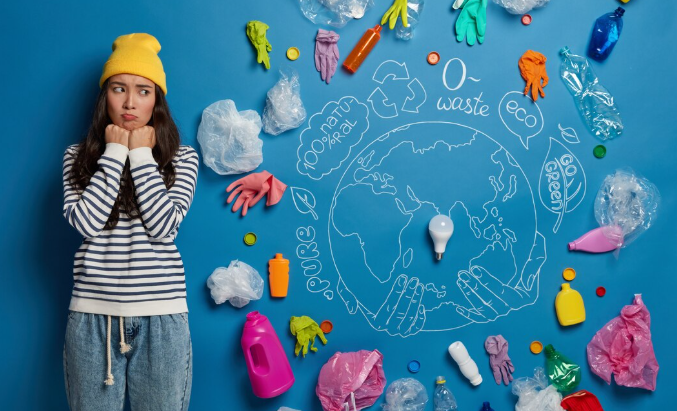
Workers are currently repricing everything in a factory in Poland. Not because their prices were altered yesterday. because the invoices are finally catching up after they changed three weeks ago. The CEO of DST-Pack, Stanislav Krykun, has been observing quotes from Chinese plastic suppliers increase by about 15% in recent weeks, and he understands the implications long before a customer opens a box of chocolates in December.
The problem with petrochemical inflation is that. It doesn’t make an announcement. Unlike crude oil, it doesn’t flash across a ticker. It leaks. Silently, slowly, through supply chains that most people are unaware of until the cost of a commonplace item seems a little, mysteriously off.
| Category | Details |
|---|---|
| Topic | Strait of Hormuz Crisis & Global Petrochemical Inflation |
| Geographic Focus | Middle East — Persian Gulf, Iran, Oman border region |
| Width at Narrowest Point | 21 miles |
| Daily Oil & Gas Flow | ~20 million barrels per day (approx. 20% of global petroleum consumption) |
| Crisis Trigger | U.S.-Iran conflict beginning February 28, 2026 |
| Current Crude Oil Price | Above $100 per barrel |
| Active Petrochemical Complexes (Middle East) | 193 facilities handling 22% of global supply |
| Plastics Price Increase Observed | ~15% rise reported by packaging manufacturers |
| Fertilizer (Urea) Price Spike | 32% increase in a single week at New Orleans import hub |
| IEA Emergency Oil Release | 400 million barrels — largest coordinated release in IEA history |
| Key Industry Affected | Petrochemicals — feedstocks for packaging, textiles, medical supplies, food, autos |
| Pipeline Bypass Capacity | Only 3.5–5.5 million barrels/day — far below normal strait volume |
Since the U.S.-Iran war started at the end of February, shipping through the Strait of Hormuz, which is between Iran and Oman and is only 21 miles across at its narrowest, has slowed to almost nothing. Oil prices surpassed $100 per barrel. In the US, gas prices reached $4 per gallon. The headlines were generated by those figures. Naphtha, benzene, butadiene, and styrene—the petrochemical feedstocks used in hospital gloves, pasta packaging, car dashboards, detergent bottles, and the molded plastic trays inside Advent calendars that Krykun is already concerned about for Christmas 2026—did not make headlines.
About 22% of the world’s supply is produced by the 193 active petrochemical complexes in the Middle East. Each and every one of them relies on the strait to export goods. It’s possible that a large number of consumers believe petrochemicals are some specialized industrial issue that has little bearing on their daily lives. They’re not. In a very literal sense, they are the material layer that underlies nearly everything that is produced and consumed on Earth.
The system’s inherent lag is what makes this specific inflation wave unique and, in some respects, more difficult to control. A business such as DST-Pack verifies production schedules months ahead of time, fixes prices, ships to manufacturers, who fill the packaging before shipping to retailers. Decisions made four to six months prior may be reflected in a product’s cost structure by the time it reaches the shelf. However, the new, higher prices are already being quoted for orders placed at this time. That’s the unseen pressure building up in the background.
It’s difficult to keep the fertilizer story from coming to mind as you watch this develop. Approximately one-third of fertilizer traded worldwide passes through the strait. In particular, the strait transports about two-thirds of the world’s seaborne supply of urea, the fertilizer used to feed wheat and corn on a large scale. This month, prices at the import hub in New Orleans increased by 32% in just one week. Fertilizer decisions made by farmers in the middle of spring planting season will have an impact on fall harvests. August is not a time for catching up. Silently, the suffering builds up and eventually manifests itself in the cost of bread.
Both the IMF and the IEA have indicated that if this disruption continues, it will cease to be an energy story and turn into a general inflation and growth story. 400 million barrels have already been released from emergency reserves by the IEA, which is the biggest coordinated release in its history. That purchases time. The equation is not resolved by it. Perhaps 3.5 to 5.5 million barrels per day can be diverted around the strait by pipelines in Saudi Arabia and the United Arab Emirates. 20 million is the typical flow. It’s not comforting math.
Right now, it seems like markets are still figuring out what a protracted disruption truly looks like. The cost of gas feels instantaneous. However, the hospital gloves, the plastic packaging, the pasta bags, and the Advent calendar trays are on the way. Businesses in supply chains are purchasing as much merchandise as they can because they believe that conditions will worsen before they improve. Whether the fighting ends quickly enough to stop that second wave from breaking is still up in the air. As of right now, the majority of consumers are still unaware of the word that is subtly circulating through procurement desks, shipping offices, and factory floors from Warsaw to Chicago. plastics.