
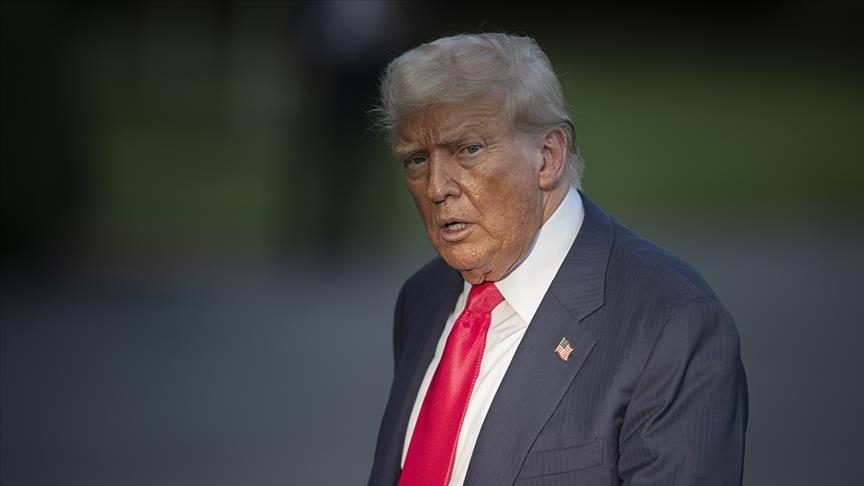
The Munich Security Conference has issued a stark warning about Trump’s wrecking-ball politics, cautioning that the US President’s disruptive approach is dismantling the postwar international order and could lead to a world dominated by regional hegemons and wealthy elites. The annual report, released ahead of the conference opening Friday in Berlin, describes how Washington’s current agenda threatens more than 80 years of established international cooperation and rules-based governance.
The 121-page report, featuring an elephant on its cover in apparent reference to the Trump administration as “the elephant in the room,” will be discussed by more than 100 world leaders, defense ministers, and foreign officials attending the conference. According to the Munich Security Conference, the administration’s disregard for international law and existing institutions represents a fundamental challenge rather than mere policy adjustments.
The report specifically cited President Trump’s military actions and territorial ambitions as evidence of the shift away from post-1945 norms. Within his first year in office, the administration has used force against targets in Iraq, Iran, Nigeria, Somalia, Syria, Venezuela, and Yemen, while insisting on acquiring Greenland, according to the document. These actions violate basic principles of territorial integrity and the prohibition of force against other states, the authors noted.
“If the leading state fails to abide by the underlying principle of the international legal system it once championed, the already ailing system faces total collapse,” the report cautioned. The Munich Security Conference warned that this approach to governance could have far-reaching consequences for global peace and stability.
Rising Anti-Establishment Movements Fuel Political Transformation
However, the report contextualized Trump’s wrecking-ball politics within a broader Western trend toward far-right and anti-establishment movements. These political forces have launched what the authors describe as a “culture war” against liberal ideals and institutions across multiple countries. The movements demonstrate particular opposition to open borders, multiculturalism, and liberal internationalism, claiming these values threaten civilizational identity.
Additionally, the report questioned whether dismantling existing institutions would actually deliver the promised benefits of increased security, prosperity, and freedom. Instead, the Munich Security Conference predicted a world governed by transactional deals rather than principled cooperation, where private interests supersede public welfare and regional hegemons replace universal norms.
“Ironically, this would be a world that privileges the rich and powerful, not those who have placed their hopes in wrecking-ball politics,” the authors wrote. The assessment suggests that supporters of disruptive political movements may ultimately find themselves disadvantaged by the very changes they advocate.
European Security Concerns Intensify
Meanwhile, European nations face mounting insecurity as Washington’s commitment appears increasingly uncertain. The report described US support for Ukraine as wavering, while threatening rhetoric regarding Greenland has amplified European anxieties about American reliability. According to the Munich Security Conference, European states now perceive Washington’s approach as volatile, oscillating between reassurance, conditionality, and coercion.
Survey data revealed widespread European concern about the administration’s direction. When asked whether Trump’s policies would benefit their countries, 72% of Germans, 63% of French respondents, 60% of Italians, and 54% of British participants answered negatively, according to the polling conducted by the Munich Security Conference.
In contrast, concerns about global impact proved even more pronounced. The survey found that 69% of Germans, along with 60% in both France and Italy and 53% in the United Kingdom, believe Trump’s policies will harm the world. Regarding NATO reliability, 66% of Germans, 52% of British respondents, 50% of French participants, and 47% of Italians indicated the US has become less dependable as an alliance member over the past six months.
Call for European Strategic Response
The report urged European states to maintain unity, develop independent defense capabilities, and forge new strategic partnerships to address growing unpredictability. According to the Munich Security Conference, strengthening international institutions requires bold action from defenders of the rules-based order.
“Effectively pushing back against the demolition men requires much more political courage and innovative thought,” the authors stated. They emphasized that actors defending international rules must demonstrate the same boldness as those seeking to destroy them.
Conference participants gathering Friday will likely focus on coordinating responses to these challenges, though the report provides no specific timeline for when European nations might achieve greater strategic autonomy. The outcome of these high-level discussions remains uncertain as world leaders navigate an increasingly complex geopolitical landscape.
