
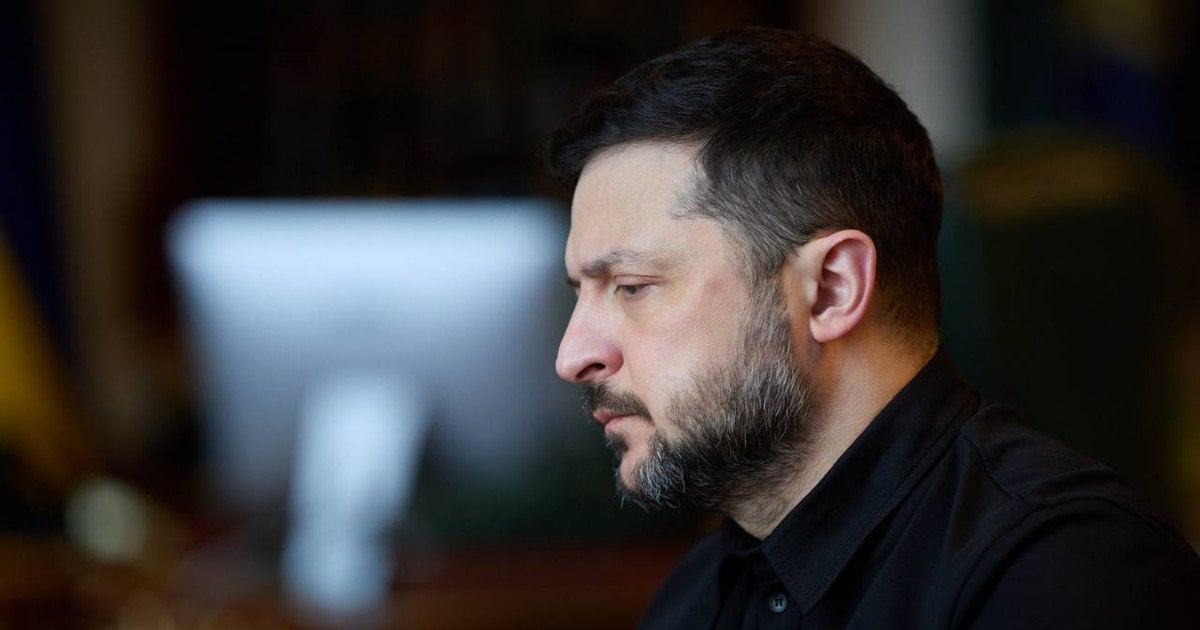
Ukrainian President Volodymyr Zelenskyy has accused Russian leader Vladimir Putin of attempting to undermine European unity through internal political manipulation, warning that Moscow is exploiting certain European figures to weaken the bloc from within. In a recent interview with POLITICO, Zelenskyy stated that Putin’s strategy focuses on dividing EU member states to achieve sanctions relief and regain access to frozen Russian assets.
According to the Ukrainian president, Putin is relying on what he described as “internal blowings” carried out by select political representatives within Europe. Zelenskyy emphasized that while Putin has partially succeeded in creating divisions at times, Europe currently remains in good shape overall.
Putin’s Strategy to Weaken European Unity
Zelenskyy explained that Putin fundamentally lacks respect for Europe, despite the continent being within Russia’s sphere of interest. The Russian leader has consistently attempted to exploit vulnerabilities within the European Union by supporting politicians who oppose collective action against Moscow. These efforts aim to fracture the consensus that has kept sanctions in place since Russia’s full-scale invasion of Ukraine.
The Ukrainian president noted that certain representatives within European countries have begun fighting against unity on the continent. These internal actors, whether knowingly or unknowingly, serve Putin’s broader objective of dismantling the coordinated Western response to Russian aggression.
Sanctions and Frozen Assets as Primary Targets
Zelenskyy clearly outlined what Putin hopes to achieve through his campaign to divide Europe. According to the Ukrainian leader, Putin’s primary aim is to secure the lifting of economic sanctions and regain access to billions of dollars in frozen Russian assets held in Western financial institutions. These assets have been immobilized as part of the international response to Russia’s actions in Ukraine.
The Ukrainian president emphasized that achieving these goals requires Putin to undermine European solidarity. “For that, he does not need unity, he does not need a strong Europe,” Zelenskyy stated, highlighting the direct connection between Putin’s divisive tactics and his economic objectives.
Implications for European Unity and Security
The warning from Zelenskyy comes at a crucial time for European security and cohesion. Throughout the conflict in Ukraine, maintaining unified support for sanctions and military assistance has proven challenging, with various political movements across Europe advocating for different approaches to the war. Some political parties and figures have called for negotiations with Russia or questioned the continuation of support for Ukraine.
Additionally, the frozen Russian assets represent a significant point of contention in international discussions. European countries hold substantial Russian reserves that were immobilized following the invasion, and debates continue about whether and how these funds might be used to support Ukraine’s reconstruction or as leverage in future negotiations.
Europe’s Response to Russian Interference
Meanwhile, European institutions have increasingly focused on countering foreign interference in member states’ political processes. The European Union has implemented measures to combat disinformation and has sanctioned individuals and entities involved in attempts to destabilize European democracies. However, Zelenskyy’s comments suggest that these efforts face ongoing challenges from political actors within Europe itself.
In contrast to Putin’s objectives, Zelenskyy stressed the importance of maintaining European unity as essential not only for Ukraine’s defense but for broader European security. The Ukrainian president’s remarks serve as both a warning and an appeal to European leaders and citizens to remain vigilant against divisive influences.
European leaders have not yet issued formal responses to Zelenskyy’s specific allegations, though discussions about maintaining sanctions and supporting Ukraine remain ongoing at both EU and national levels. The extent to which Putin’s strategy will continue to impact European decision-making remains uncertain as the conflict enters its third year.
