
With the steam rising from the thermal basins, the frost still clinging to lodgepole pines, and the ground appearing perfectly normal underfoot, Yellowstone experiences a unique kind of quiet in the early spring. It is nearly unbelievable to stand close to the Norris Geyser Basin and realize that one of the planet’s most significant geological systems is located beneath that thin layer of earth. However, geologists do not focus on the visible. They are observing what is in motion.
Additionally, something has recently started to move in ways that haven’t been noted since official monitoring of this area started.
| Yellowstone Supervolcano — Key Facts & Monitoring Information | Details |
|---|---|
| Official Name | Yellowstone Caldera |
| Location | Northwestern Wyoming, USA (extends into Idaho & Montana) |
| Type | Supervolcano / Caldera System |
| Last Major Eruption | Approximately 640,000 years ago |
| Monitoring Start | 1923 (ground deformation); Seismic network expanded significantly post-1970s |
| Current Alert Level | NORMAL / Aviation Code: GREEN (as of April 1, 2026) |
| Earthquakes (March 2026) | 61 located events; largest M1.9 |
| Annual Earthquake Average | 1,000–3,000 events per year |
| Ground Uplift (2004–2009) | Approx. 25 cm (9.8 inches) recorded |
| Recent Deformation | North caldera rim uplift (July 2025–January 2026), now paused |
| Magma Depth | Estimated 6–10 km beneath surface |
| Primary Monitoring Body | Yellowstone Volcano Observatory (YVO) — USGS |
| Notable Recent Events | Echinus Geyser reactivation (Feb 2026); Black Diamond Pool eruption (March 9, 2026) |
The discourse surrounding Yellowstone has subtly changed as a result of a recent study that was published in the journal Science, something that mainstream media hasn’t quite kept up with. For many years, the prevailing theory maintained that Yellowstone’s volcanic system was supplied by a deep mantle plume, which is a column of magma rising from deep within the Earth. That picture is considerably complicated by the new research. Researchers discovered that movements in the Earth’s upper mantle, rather than deep plume activity, seem to be the main cause of Yellowstone’s volcanic behavior using a three-dimensional model designed to replicate current topography, seismic patterns, and subsurface stress. Even more unsettling is the model’s suggestion that magma moves far closer to the surface than previously thought. That’s not a small improvement. It’s a structural reconsideration.
This is especially intriguing because of the timing. Researchers who were already keeping a close eye on the system noticed a measurable uplift event along the north caldera rim between July 2025 and January 2026—a 19-mile bulge. Official alert levels are still at NORMAL, and the uplift has since stopped. However, the fact that it occurred at all, when combined with this new knowledge of the actual location of the magma, gives the narrative a depth that is worth pondering.
After being dormant for years, Echinus Geyser erupted about 40 times in a single month in February 2026. It only erupted once in March before abruptly quieting down once more. At 1:27 a.m. on March 9, sensors at Black Diamond Pool in Biscuit Basin—the location of a hydrothermal explosion only two years earlier—registered an eruption that was simultaneously picked up by temperature, seismic, and acoustic instruments. These are not disastrous occurrences. However, they are also not insignificant.
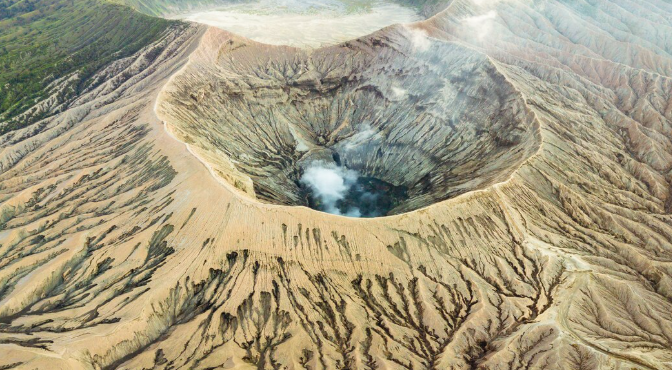
It’s difficult to ignore the fact that each of the data points has a plausible explanation when considered separately. When combined, however, they paint a picture that scientists are carefully crafting their language around. The USGS has consistently stated that there are no indications of impending activity and that Yellowstone is not overdue for an eruption. That framing is true. It’s also important to keep in mind that the historical record of only three confirmed major eruptions—roughly 2.08, 1.3, and 0.631 million years ago—provides a statistically meaningless basis for estimating eruption intervals, as several scientists have now publicly acknowledged.
The steady stream of official updates and peer-reviewed research gives the impression that the scientific community is working at the edge of what existing models can explain. That’s simply where science resides most of the time, so it’s not concerning. However, Yellowstone commands a different kind of attention, in part because the consequences of making a mistake are so unfair.
The park remains open for the time being. Old Faithful is photographed by tourists. At visitor centers, rangers respond to inquiries. And a few kilometers beneath it all, something that took millions of years to construct is still going about its business, largely unaffected by our level of comprehension.