
The American electrical grid has a subtle unsettling quality. You operate dishwashers, flip switches, and charge phones on a daily basis without really considering what’s underneath. And that is, in a sense, the issue. The majority of the nation’s electrical infrastructure was constructed decades ago, some of it even before color televisions were widely used in American homes. It hums along, mostly unnoticed and largely ignored. Until it doesn’t.
The U.S. Department of Energy announced approximately $1.9 billion in additional funding on March 12, 2026, to start addressing that issue, or at least a portion of it. The SPARK program focuses on reconductoring, which is essentially replacing older, lower-capacity power lines with newer, higher-capacity ones without the need to purchase new land or construct new towers. Engineers have been advocating for precisely this kind of focused intervention for years, but it’s an unglamorous solution to a huge issue. Washington seems to be starting to take the grid seriously at last, albeit slowly and haltingly.
US Power Grid Infrastructure — Key Facts & Overview
| Subject | United States Electrical Power Grid Infrastructure |
| Governing Body | U.S. Department of Energy (DOE) — Office of Electricity (OE) |
| Current Secretary | Chris Wright (as of 2025) |
| Latest Investment Announced | ~$1.9 billion (SPARK Program, March 12, 2026) New |
| Program Name | Speed to Power through Accelerated Reconductoring and Key Advanced Transmission Technology Upgrades (SPARK) |
| IIJA Grid Allocation (2021–2026) | $73 billion for grid modernization, new power lines, and renewable energy expansion |
| Projected US Grid Investment (next decade) | ~$1 trillion |
| Global Grid Investment Forecast (2026–2035) | ~$5.8 trillion, including ~$700 billion for digital grid technology |
| Key Demand Drivers | AI data centers, cryptocurrency mining, electric vehicles, heat pumps, industrial electrification |
| Global Power Demand Growth (2026–2030) | 3.6% CAGR — roughly 50% faster than the prior decade |
| Application Deadlines (SPARK) | Concept papers: April 2, 2026 | Full applications: May 20, 2026 | Selections: August 2026 |
| Infrastructure Report Card Grade | C (ASCE 2025 Infrastructure Report Card) |
| Reference / Official Source | U.S. Department of Energy — energy.gov ↗ |
Grid modernization was not a priority for far too long, as Secretary of Energy Chris Wright stated bluntly when he announced the program. From a current cabinet secretary, that is a startling admission that speaks to something genuine. It took time for the grid to deteriorate. Decades of underinvestment, fragmented regulations, and a general belief that the lights would simply stay on caused it to happen gradually. Most of them did. However, the margin of error is rapidly decreasing.
The figures underlying that decline are truly astounding. Global electricity demand is expected to increase at a compound annual rate of 3.6% between 2026 and 2030, which is about 50% faster than the previous decade. Homes and factories in the conventional sense aren’t contributing significantly to that growth. Data centers are the source of it. The development of infrastructure to support cloud computing, cryptocurrency mining, and large language models has accelerated significantly beyond what grid planners were modeling even five years ago, and AI systems consume massive amounts of power. The current infrastructure was just not built to handle the demand curve that results from the gradual but steady electrification of transportation and home heating.
In a report released in late March 2026, JPMorgan described the situation as a trillion-dollar investment opportunity for the United States alone. Between now and 2035, analysts predict that grid-related spending will total approximately $5.8 trillion worldwide, with about $700 billion going toward digital grid technologies. Institutional investors, infrastructure funds, and energy companies all pay close attention to those figures. The question of whether that capital actually flows in time is a different one, and no one can currently provide a definitive answer.
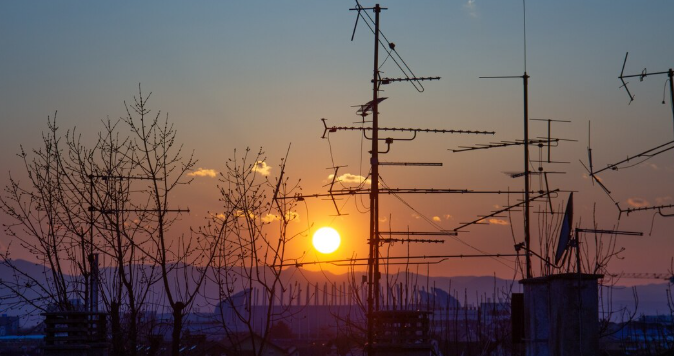
You can see exactly what the data is describing by taking a stroll through specific areas of the rural South or the American Midwest. Transformers with lead times measured in years due to domestic manufacturing capacity never keeping up with demand, transmission lines strung between old wooden poles, and substations that haven’t been significantly upgraded since the Reagan administration. The country’s energy infrastructure has continuously received a C grade from the American Society of Civil Engineers, and the 2025 report card was no exception. A passing grade is a C. It’s not comforting.
It’s not just a physical challenge. Grid expansion has been hampered for years by regulatory obstacles. Each of the hundreds of utilities, grid operators, state regulators, and federal agencies that make up the U.S. power grid has overlapping jurisdiction and frequently competing priorities. Before a single tower is constructed, a new high-voltage transmission line across state lines may require ten years or more to complete due to environmental reviews, siting approvals, and legal challenges. This is partly why the SPARK program focuses on reconductoring; using existing rights of way results in fewer permits, fewer conflicts, and faster deployment. The pace of upcoming projects will reveal the true nature of this strategy, which may be a true strategic shift rather than merely a political ploy.
All of this has a national security component that is not sufficiently covered by the media. Aging infrastructure is more susceptible to cyberattacks, severe weather, and straightforward mechanical failure. Widespread outages affect hospitals, water treatment plants, communications networks, and financial systems in addition to households. For years, military strategists and policymakers have been aware of this. Converting that knowledge into consistent funding and political will has always been challenging. Although the $73 billion allotted for grid modernization through the Infrastructure Investment and Jobs Act between 2021 and 2026 showed a sincere change in commitment, analysts still believe that much more is ultimately required.
It’s difficult to avoid experiencing an odd mixture of cautious optimism and impatience as this develops. The amount of money being discussed—a trillion dollars over the next ten years, from both public and private sources—is truly noteworthy. Additionally, there are actual technological tools that were previously unattainable, such as sophisticated conductors, digital monitoring systems, and grid-enhancing software that can maximize the capacity of current hardware. The issue is whether the political and regulatory structures can act quickly enough to meet the demands of the physical infrastructure crisis. Whether they can is still up in the air. However, operating a 21st-century economy on a grid from the mid-20th century is becoming less and less feasible.