
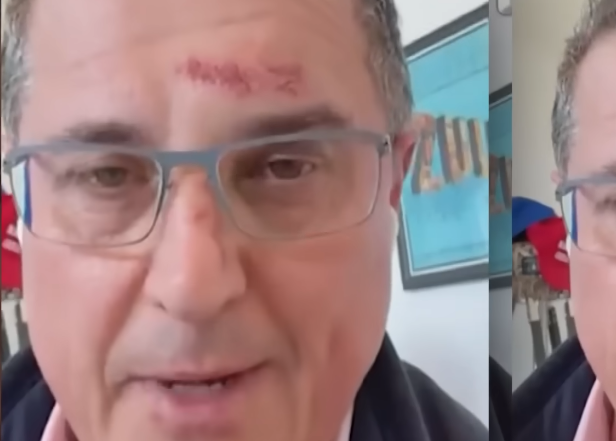
In one version of this tale, Ronnie Taylor is a reasonable man with a justifiable grievance who made a string of increasingly difficult decisions that ultimately led to his downfall. In a different version, he is just a regular guy who got severely outmatched after stepping in front of a motorcycle to raise awareness about neighborhood safety. Part of what makes the entire event—a residential street in Brentwood, Tennessee, a Kawasaki, two days of simmering tension, and a body cam that caught the majority of it—so unusually watchable is that both of these versions are essentially true at the same time.
According to Taylor’s own account, Alan Ritchson roared down the block for the second time in two days on a Sunday afternoon while he was washing his own motorcycle in his driveway. Taylor may have been more offended by the speeding than someone without that specific frame of reference because he is an enthusiastic rider himself.
| Category | Details |
|---|---|
| Incident location | Brentwood, Tennessee (Nashville suburb) — residential neighborhood street |
| Date of altercation | Sunday, March 22, 2026; preceded by a confrontation the prior day (Saturday, March 21) |
| Ronnie Taylor | Local Brentwood resident and self-described avid motorcycle rider; neighbor of Alan Ritchson; no public profile prior to incident |
| Trigger | Taylor claimed Ritchson was riding his motorcycle too fast and creating a noise disturbance through the neighborhood on two consecutive days |
| Day 1 (Saturday) | Taylor witnessed Ritchson allegedly speeding; initial verbal confrontation occurred |
| Day 2 (Sunday) | Taylor stepped in front of Ritchson’s motorcycle to block him; pushed Ritchson off his Kawasaki; Ritchson was accompanied by his young sons on separate bikes key detail |
| Physical sequence | Taylor pushed Ritchson twice; Ritchson hit Taylor multiple times; Taylor sustained visible facial injuries (cut forehead, marks on nose and cheeks) |
| Viral footage | TMZ published edited clip showing only Taylor on the ground being hit — initial clip lacked context; Ritchson’s own body cam footage later provided fuller picture context changed narrative |
| Police ruling | Brentwood Police Captain Steven Pepin: “Mr. Ritchson’s actions were found to be in self-defense. No criminal charges will be pursued.” Case closed. closed |
| Taylor’s decision | Declined to pursue charges; received no financial compensation (“Not a f***ing penny”); said he “didn’t even lawyer up” |
| Taylor’s stated motive | “I was only interested in the safety of my neighborhood” — denied knowing Ritchson was a celebrity at time of confrontation |
| Official reference | Hollywood Reporter: Tennessee Police — Alan Ritchson Acted in Self Defense (hollywoodreporter.com) |
He claims that after seeing Ritchson pass by once and twice, he went out into the street and obstructed the bike on the second pass. “You got to stop,” he said. “Someone’s going to get hurt.” Ritchson was pushed off the motorcycle by him. He then admittedly shoved him once more. He claims that he never punched anyone. Additionally, he claims that he once challenged Ritchson to strike him. Ritchson struck him.
The later portion of that scene was captured in the video that TMZ initially released. It showed Taylor on the ground in a front lawn with Ritchson standing over him and delivering multiple blows, with Taylor’s face obviously suffering the most. It was the type of video that appears clear-cut and rather damning when its context is removed. Like those things, it circulated quickly. Before anyone had seen the entire video or heard the entire sequence of events, the story that developed around it was taking shape. In 2026, this is a common dynamic: the take comes in, the clip comes in, and the picture doesn’t come in until much later.
Over the next twenty-four hours, a far more complex set of facts emerged. Depending on how you interpret the situation, Ritchson had been wearing a body camera. This could have been a sign that something had happened the day before that made him anticipate more trouble, or it could have been a sensible precaution for a public figure who rides motorcycles in a neighborhood where he is obviously not universally popular.
The body camera footage depicted Taylor rushing into the street to confront him, the push that knocked Ritchson off the bike, and the series of events that culminated in what the police described as self-defense after watching it all. The Hollywood Reporter was informed by Brentwood Police Captain Steven Pepin that no criminal charges would be filed following a review of the evidence, which included witness statements and video footage. According to Pepin, it was determined that Ritchson acted in self-defense.
The information regarding who was riding with Ritchson on that Sunday has an intriguing twist. Ritchson’s sons were reportedly the other two people on motorcycles that Taylor described as being in the group. It’s unclear if Taylor was aware of that when he entered the street. Anyone can speculate as to whether it would have altered his computation. The fact that a neighbor blocked Ritchson’s path and pushed him off his bike on a Sunday afternoon while he was riding with his children does add to the picture. The original clip also lacks that context.
To his credit, Taylor handled the fallout with an unvarnished honesty that led to surprisingly positive interviews. When he appeared on TMZ Live, he gave his honest account. He admitted to shoving Ritchson. He admitted that at the time, he had no idea who Ritchson was and that he was going to confront a television personality whose whole persona is based on being someone you don’t want to argue with. “I never took a swing at the guy,” said the man.
“I pushed him, that’s all I did.” After talking to police, he chose not to file charges. Additionally, he stated unequivocally and emotionally that he had not been paid a dime. “Not a single penny.” No quiet deal, no settlement, no attorneys. “He’s a Hollywood superstar and I’m not,” Taylor told TMZ. “He’s got lawyers.” Despite the obvious marks on his face, he seemed uninterested in making his life more difficult. I didn’t even get a lawyer.”
The clarity of the man’s self-evaluation, rather than the decision itself, is what makes that statement almost admirable. In hindsight, at least, he was aware of what he was entering, and instead of extending it, he decided to leave. Ritchson was the first person the police called. Taylor was not charged with reckless endangerment by Ritchson. After that, Taylor decided not to prosecute Ritchson. The case was closed. Brentwood returned to its status as a peaceful suburb.
In the end, it’s difficult to deny that Ronnie Taylor was a person whose instinct to address a neighborhood safety issue was genuine and not irrational, but whose execution of that instinct was appallingly bad. He moved ahead of a motorcycle in motion. He gave the rider two shoves. He instructed him to strike him. He ended up making national headlines after landing on the ground in his own front yard—not because he was well-known, but rather because the man riding the motorcycle was. Seldom does context simplify anything. In this instance, it simply gave everyone a slightly more human appearance than the initial thirty-second clip implied.