
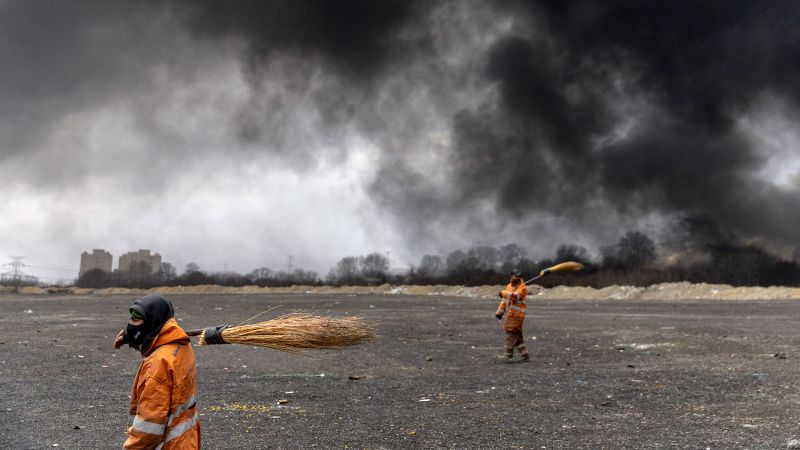
US Defense Secretary Pete Hegseth announced Friday that Iran’s military capabilities have suffered severe degradation following an extensive campaign of coordinated strikes by American and Israeli forces. Speaking at a Pentagon press briefing, Hegseth detailed the dramatic impact of the sustained military operations on Iran’s defense infrastructure, marking a significant escalation in regional tensions.
According to the Defense Secretary, Iran has been left virtually defenseless across multiple military domains. Hegseth stated that Iran currently has no functioning air defenses, air force, or navy, representing a near-total collapse of the country’s conventional military power projection capabilities.
Massive Reduction in Iranian Military Assets
The Pentagon chief provided specific figures illustrating the extent of Iran’s military decline. Hegseth reported that Iranian missile volume has decreased by 90 percent, while the number of operational one-way attack drones has fallen by 95 percent. These dramatic reductions in Iran’s military capabilities underscore the intensity and effectiveness of the strike campaign, according to US officials.
Additionally, Hegseth referenced Iranian activities in the Straits of Hormuz as evidence of what he characterized as “sheer desperation.” The strategic waterway has long been a flashpoint for regional tensions, and recent Iranian actions there appear to reflect the country’s diminished military options elsewhere.
Unprecedented Scale of Military Operations
The scope of the joint US-Israeli military campaign represents an extraordinary level of sustained combat operations. According to Hegseth, combined American and Israeli forces have struck over 15,000 enemy targets, averaging more than 1,000 strikes per day. This pace of military action against Iranian targets appears unprecedented in modern warfare.
However, the exact timeline of these operations remains unclear, as Pentagon officials have not specified when the campaign began or how long it has continued. The figure of thousands of daily strikes suggests an intensive military operation of significant duration and scale.
Strategic Implications of Iran Military Degradation
The reported destruction of Iran’s military infrastructure carries profound implications for regional security dynamics in the Middle East. Iran has historically served as a major military power in the region, supporting various proxy forces and maintaining significant deterrent capabilities against potential adversaries. The near-complete elimination of these capabilities fundamentally alters the regional balance of power.
Meanwhile, Hegseth indicated that operations against Iranian military targets will continue until all meaningful defense capabilities are eliminated. The Defense Secretary stated that the campaign aims to “defeat, destroy, disable” Iran’s military infrastructure at an unprecedented pace, adding that all of Iran’s defense companies will soon be destroyed.
Regional and Global Response
The announcement of such extensive military operations against Iran raises questions about international reaction and the potential for further escalation. While Hegseth’s remarks detail the operational success of the campaign, authorities have not confirmed the broader diplomatic or strategic context surrounding these military actions.
In contrast to previous limited engagements between the United States, Israel, and Iran, the current campaign represents a qualitatively different level of military confrontation. The systematic dismantling of Iran’s military capabilities suggests a strategic objective beyond tactical responses to specific threats.
The Pentagon has not announced a specific timeline for concluding military operations against Iranian targets or detailed what conditions might lead to a cessation of strikes. The ultimate duration and final objectives of the campaign remain uncertain as operations continue at their current intensive pace.
