
You enter Malheur National Forest by driving east from Prairie City, Oregon, a small town with about 800 residents that is peacefully situated in the high desert where the Blue Mountains start to fold into themselves. The road rises. The ponderosa pines get thicker. And the largest known living thing on Earth is somewhere beneath the soil beneath your tires, extending in all directions through the darkness in a web of hair-like filaments. It lacks a distinct shape. It doesn’t create a spectacular display. If you know what you’re looking at, the patches of dead and dying conifers that indicate where it has been feeding are the only obvious signs of its presence. This enormous fungus, Armillaria ostoyae, has been stealthily spreading throughout these mountains for 2,400–8,650 years.
It takes a moment to truly absorb the numbers associated with this organism. It spans about 2,385 acres, which is almost three times the area of Manhattan’s Central Park. It weighs about 35,000 tons, which is about the same as 60 fully loaded Boeing 747s. It was already ancient when Plato was writing in Athens, according to the earliest estimate of its age.
| Category | Details |
|---|---|
| Scientific Name | Armillaria ostoyae |
| Common Name | “Humongous Fungus” |
| Location | Malheur National Forest, Blue Mountains, Oregon, USA |
| Nearest Town | Prairie City, Oregon (population ~800) |
| Area Covered | 2,385 acres — nearly three times the size of Central Park |
| Estimated Age | Between 2,400 and 8,650 years old |
| Weight | Approximately 35,000 tons — equivalent to 60 Boeing 747s |
| Size Comparison | Five times the size of Monaco |
| Growth Structure | Underground mycelium network — threadlike hyphae spreading beneath soil |
| Growth Type | Indeterminate — continues expanding as long as conditions allow |
| Ecological Role | Both decomposer (saprotroph) and tree-killing pathogen |
| Disease Caused | Armillaria root disease — kills swaths of conifers across the US and Canada |
| Key Expert | Antonis Rokas, Professor of Biological Sciences, Vanderbilt University |
| Mycology Expert | Andrew Wilson, Associate Curator of Mycology, Denver Botanic Gardens |
| Key Pressure | Fire suppression policies; climate change; increased logging proposals in Oregon |
According to Vanderbilt University biological sciences professor Antonis Rokas, it is a huge underground network of thread-like structures that can grow on a variety of substrates and keep growing as long as its surroundings permit. Armillaria ostoyae exhibits what biologists refer to as indeterminate growth, in contrast to mammals, which reach a fixed adult size before stopping. It will continue. For almost nine thousand years, Oregon has had all it needs to do just that thanks to its moist Pacific Northwestern climate, which is rich in dead and decaying wood.
The enormous fungus is more than just a passive ecological marvel, which is what makes it truly difficult to consider and what the simple headline version of the story tends to ignore. It kills people as well. Large tracts of conifers in the United States and Canada are attacked and killed by Armillaria root disease, which is caused by Armillaria ostoyae. Aerial surveys of Malheur reveal dead trees that are indicative of the fungus’s feeding strategy rather than a byproduct of its presence.
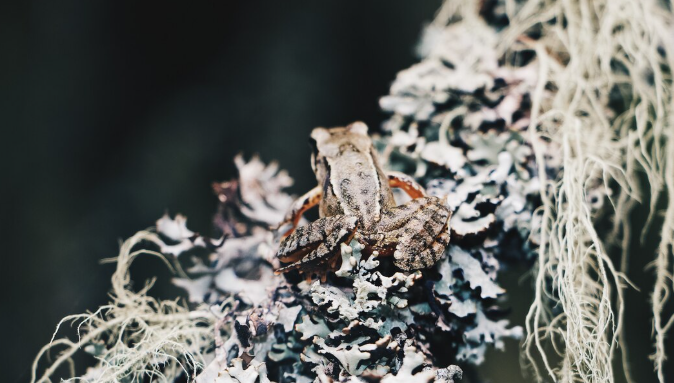
The organism is both an active pathogen that attacks living trees when it runs out of dead ones and a decomposer that breaks down dead wood and recycles nutrients back into the soil. Andrew Wilson, associate curator of mycology at the Denver Botanic Gardens, describes this process as the most effective decomposition of terrestrial plant matter on the planet. By destroying its surroundings, it produces its own food supply. That is an amazing survival tactic. From the standpoint of forest management, it’s also a major persistent issue.
The twentieth-century fire suppression regulations significantly complicated the situation. Aggressively suppressing naturally occurring wildfires was the standard approach to forest management in the American West for many years. Despite its good intentions, this practice had a number of unforeseen ecological repercussions. It turns out that one of the natural defenses against Armillaria’s spread is fire. Without it, the fungus accelerated its growth through forest stands that would have been periodically reset by fire, spreading into areas it might not have otherwise reached. Without the unintentional help of contemporary fire suppression, the enormous fungus most likely would not have grown to its current size, according to a 2022 WIRED article. In other words, the largest organism on Earth is partially a product of human policy—a feedback loop that started decades ago with a choice made in land management offices and continues to spread throughout the ecosystem.
In the fields of forestry and mycology, there is a perception that the organism is currently at the center of a series of pressures that did not exist even a generation ago. The fungus and the forests it lives in will be impacted by how climate change is changing the moisture and temperature patterns in the Pacific Northwest, though it is genuinely unclear if these changes will ultimately limit or speed up the fungus’s growth.
The conifers that Armillaria preys on may be stressed by warmer, drier weather, which could make them more susceptible and possibly fuel the network’s continued growth. Alternatively, the same circumstances might lessen the soil moisture that the fungus needs to spread mycelially. The answer is still up for debate among ecologists. Proposals to expand logging in Oregon’s national forests, motivated by the interests of the timber industry and sometimes presented as a way to lower the risk of fire, raise different concerns about the effects of intensive harvesting on soil fungal networks that took thousands of years to form.
It’s difficult not to feel a peculiar awe for something that has been expanding through these mountains since before human civilization had writing, entirely unnoticed and uncharted. The enormous fungus existed prior to the Roman Empire. prior to the wheel. Prior to nearly everything that we consider to be ancient history. It was unknown for the vast majority of its existence until the 1990s, when the first scientific paper revealing its true scale was published.
It may take decades more to fully comprehend the ecological story of Armillaria ostoyae, including what it does to the forest, what the forest does to it, and how fire, climate, and policy interact with something this large and ancient. The pressures on the forests of the Pacific Northwest appear to be concrete. They are touching down on actual land, in actual soil, where for thousands of years something remarkable has been peacefully existing.
