
When you step outside on a clear April night and stare up long enough, something changes. The day’s cacophony, including the news, the screen, and the traffic, disappears, leaving only the sky and the gradual realization that a lot is going on up there this month. By all standards, April 2026 is among the most abundant months the night sky has provided in recent years. It’s the kind of celestial calendar that, if presented as a concert lineup, would sell out instantly: a full moon with a slightly misleading name, a planetary lineup worth setting an alarm for, the first significant meteor shower of the year, two comets making appearances, and the quiet beginning of galaxy season.
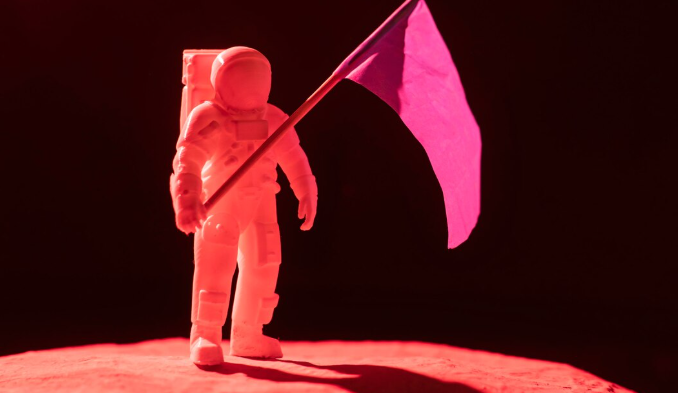
The Pink Moon, which peaked at 10:12 p.m., marked the beginning of the month. On April 1, just as the sun was disappearing from view in the west, it rose large and bright above the eastern horizon. People who anticipate a rosy sky are sometimes disappointed by the name because the moon doesn’t truly turn pink. The name is derived from the wild phlox and other early spring wildflowers that cover eastern North America at this time of year. This terrestrial phenomenon gives a celestial event its name.
| Category | Details |
|---|---|
| Subject | April 2026 Night Sky Events — Stargazing Guide |
| Full Pink Moon Date | April 1–2, 2026 (peak: 10:12 p.m. ET, April 1 / 02:12 UTC, April 3) |
| Pink Moon Location in Sky | Virgo constellation |
| Mercury Greatest Elongation | April 3, 2026 — greatest western elongation, visible pre-dawn eastern horizon |
| Planet Parade Best Viewing | April 18–20, 2026 |
| Best General Stargazing Night | April 17, 2026 |
| Lyrid Meteor Shower Peak | April 22, 2026 |
| Other Events | Two comets visible; galaxy season (spring); possible aurora activity |
| Aurora Visibility | Post-northern lights season — still possible over Great Lakes region |
| Season Context | Spring = “galaxy season” in astronomy |
| New Moon (Dark Sky Window) | Around April 10, 2026 (third quarter: 4:52 UTC) |
| Reference Website | space.com |
Regardless of color, the full moon does provide that unique brightness that casts shadows from objects you wouldn’t expect to cast shadows and fills a field or a yard with gentle white light. It’s worth taking a quick stroll outside. In terms of astronomy, the moon was in good company this year since it was in Virgo.
Mercury reached its greatest western elongation on April 3, two days later. This is when the planet appears to be at its widest distance from the sun, making it momentarily easier to see before sunrise. Under normal conditions, Mercury is actually challenging. Most of the time, it is too close to the sun’s glare to be distinguished without careful attention to detail and timing.
The window observers wait for has the greatest elongation. The advice is simple: look low, arrive before sunrise, and locate a location with an unobstructed, clear eastern horizon. Unlike stars, which tend to twinkle, Mercury will be there, small and steady. For those who are willing to forgo sleep in favor of the sky, early April mornings are more rewarding than usual because Mars also begins to rise above the horizon shortly after Mercury.
The planet parade, which is this month’s most anticipated event, peaks between April 18 and 20. According to several astronomy sources, April 17 is the best night of the month for general stargazing. One of those events that sounds better in theory than it sometimes does in practice is a simultaneous parade of planets across the sky; a lot depends on light pollution, the weather, and whether you know where to look.
Most people agree that this one is worth the effort. The planets will be in such a favorable position that anyone without a telescope should be able to trace the lineup with just a sky map and a decent dark spot. The parade and the meteor shower together make the third week of April exceptionally rich, though it’s possible that this window is overlooked in favor of the Lyrids, which peak a few days later.
As Earth travels through the debris trail left by Comet Thatcher, a comet that orbits the sun once every 415 years, the Lyrids arrive on April 22 and peak during the night. The Perseids in August and the Geminids in December are the meteor calendar’s main events; the Lyrids don’t produce as much. However, after months of relatively calm skies, the Lyrids are the first consistent shower of spring, and this timing gives them a quality that is difficult to quantify. It feels different to watch the first meteors of the year in the spring, when the air is still somewhat chilly, than it does to watch them in the summer. As the evening wears on, the radiant point rises in the northeast, close to the star Vega.
Additionally, two comets are showing up in April, which is the kind of development that enthusiastic amateur astronomers approach with caution. The brightness of comets is notoriously erratic; a comet that appears spectacular on paper may fizzle on approach, and one that is written off as unremarkable can occasionally surprise everyone. It’s unclear if either of April’s comets will be visible with the unaided eye or if binoculars are needed, but they give the month’s viewing schedule a true element of unpredictability.
The larger context for all of this is galaxy season, which is the colloquial term used by astronomers to describe spring in the northern hemisphere. During this time, long sightlines toward galaxy clusters that are hidden behind the galactic plane for the remainder of the year are made possible by Earth’s position in relation to the Milky Way.
The Virgo Cluster and dozens of individual galaxies become accessible to telescope-equipped observers in ways that are not possible for most of the year. When you give your eyes enough time to adjust, the season simply means that the sky feels deeper and the dark areas between stars are more layered for casual observers without equipment. Patience is rewarded in April. It has consistently done so.
