
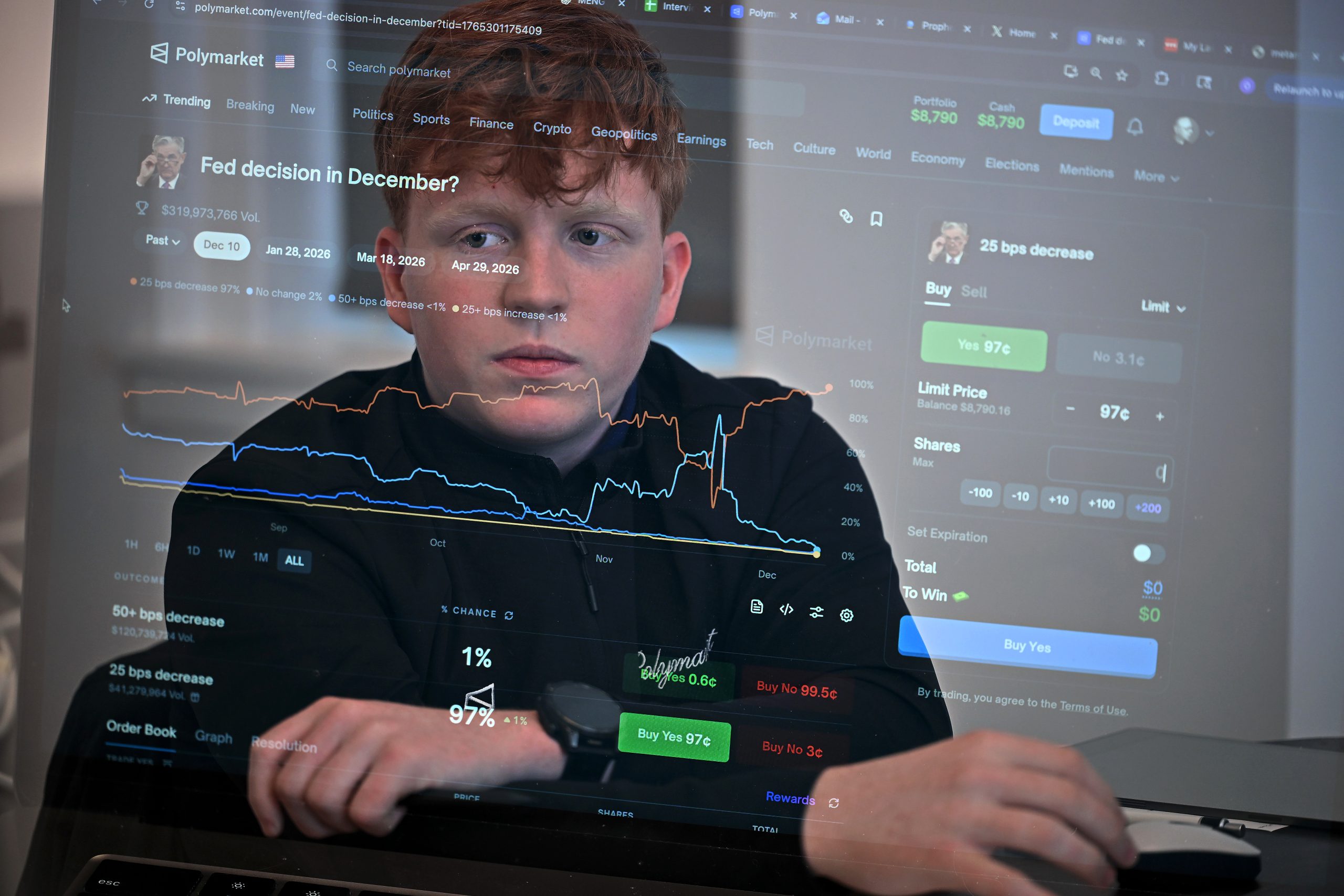
Prediction markets have exploded in popularity over the past year, allowing users to wager on everything from presidential elections to sports outcomes through platforms like Polymarket and Kalshi. However, Illinois regulators are pushing back, arguing these platforms constitute illegal gambling that bypasses state oversight and consumer protections. The conflict has intensified as the Trump administration champions the industry while states scramble to regulate or ban prediction market operations within their borders.
At the University of Chicago, 19-year-old freshman Oliver Wilson received $20,000 from Polymarket founder Shayne Coplan to launch a campus prediction market club. Wilson, who first got hooked on the platforms during the 2024 presidential election, spent a summer interning at Polymarket’s New York headquarters before pitching the club idea. Coplan responded enthusiastically to Wilson’s Instagram pitch, agreeing to fund the venture now known as Oracle Trading.
Federal Support Bolsters Prediction Markets
The Trump administration has thrown its weight behind prediction markets, with family members directly investing in the industry. Donald Trump Jr. became a strategic advisor to Kalshi, while Polymarket’s Coplan was appointed to the Commodity Futures Trading Commission’s Innovation Advisory Committee last month. This represents a dramatic turnaround for Coplan, whose apartment was raided by the FBI before the political winds shifted in his favor.
CFTC Chairman Mike Selig declared that his agency “will no longer sit idly by while overzealous state governments undermine the agency’s exclusive jurisdiction over these markets,” according to a statement issued last month. Selig argued that Americans clearly want to participate in these platforms, positioning the CFTC as the primary regulator with authority to oversee prediction market operations nationwide.
Illinois Fights Back Against Unregulated Wagering
Illinois officials see prediction markets differently than the federal government does. The state sent cease-and-desist letters to Kalshi, Robinhood, and Crypto.com during spring 2025, warning that operating prediction markets in Illinois without proper licensing violates state gambling laws. The Illinois Gaming Board made clear that such operations face both civil and criminal penalties if they continue without state approval.
State Senator Michael Hastings introduced legislation last week requiring prediction market operators to pay a $1 million licensing fee to the Illinois Gaming Board. The bill would also impose taxes equal to half of adjusted gross receipts from Illinois users. “If it quacks like a duck and it walks like a duck, it’s a duck,” Hastings said, arguing that prediction markets profit from wagers just like traditional sportsbooks.
Revenue and Regulatory Gaps
Traditional online sportsbooks in Illinois pay a $20 million startup fee and $1 million every four years to renew licenses. Additionally, they must restrict betting to users 21 and older, forgo bets on in-state college teams, and fund gambling addiction treatment programs. Prediction markets currently avoid all these requirements while operating in the same market.
Illinois has collected nearly $1.1 billion in tax revenue from legal sports wagering since launching six years ago, according to state records. However, officials don’t know how much revenue prediction markets generate because these platforms aren’t required to report betting data to states. Meanwhile, major operators like FanDuel have launched their own prediction markets, partnering with CME Group to avoid regulation while competing against their own licensed sportsbooks.
Legal Battles Spread Across Multiple States
Coinbase sued Illinois Attorney General Kwame Raoul and gaming board officials at year’s end, seeking to block enforcement of gambling regulations against its prediction market platform. The San Francisco-based cryptocurrency exchange filed similar lawsuits against Connecticut and Michigan, while Kalshi is suing Maryland, New Jersey, Nevada, New York and Ohio. These cases argue that federal law preempts state gambling regulations when it comes to prediction markets.
Massachusetts has taken the most aggressive stance against prediction markets. The state’s attorney general sued Kalshi in September 2025, alleging the company illegally advertised itself as “The First Nationwide Legal Sports Betting Platform” while ignoring age restrictions. A state judge issued an injunction in late January banning Kalshi from offering sports betting in Massachusetts until it complies with state gambling laws.
Addiction Concerns Mount
Keith Whyte, former executive director of the National Council for Problem Gambling, said clinicians see no practical difference between prediction markets and traditional gambling. An Illinois study conducted during the COVID-19 pandemic found approximately 383,000 adults have gambling problems, with another 761,000 at risk of developing addiction. Experts believe actual numbers may be higher since the survey occurred before online sports gambling became fully implemented.
The Massachusetts lawsuit noted that 139,600 state residents experience gambling problems, with internet searches for “gambling addiction” spiking after sports gambling legalization. Prediction markets facilitate wagering without safeguards like addiction screening, self-exclusion programs, or mandatory funding for treatment services that licensed sportsbooks must provide.
Campus Expansion Strategy
Wilson’s Oracle Trading club represents part of a broader promotional push by prediction markets onto college campuses. Despite recognizing addiction potential, Wilson maintains he makes “calculated risks” rather than gambles. He estimates making up to 50 bets weekly on Polymarket, though many involve arbitrage strategies exploiting pricing differences across platforms. The club has established a board with four members and formed an LLC while working to secure its promised $20,000 funding.
However, setting up prediction market accounts requires only downloading an app and funding it through debit cards, bank accounts or cryptocurrency. This ease of access concerns addiction specialists who note that prediction markets can create the same excitement and compulsive behaviors as traditional gambling forms.
DePaul University assistant law professor Karl Lockhart, who studies prediction markets, said the conservative-majority Supreme Court will likely need to resolve the federal-state jurisdictional conflict. However, the court’s decision remains uncertain since federal oversight conflicts with traditional conservative support for states’ rights. Lockhart emphasized that stronger regulatory frameworks are necessary regardless of which level of government ultimately prevails in court.
