
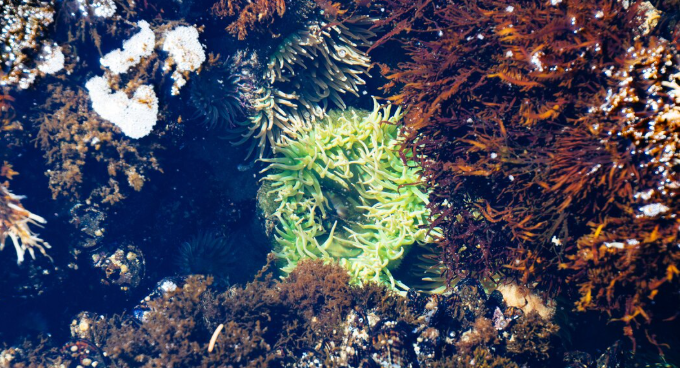
If you’ve ever had the good fortune to snorkel over a reef, picture it from memory rather than from a nature documentary. The first thing is the color. Fish threading between coral heads with a kind of lazy confidence that comes from living inside a functioning system, impossible blues, yellows, and oranges moving just below the surface. Finding that image in the real world is getting more difficult. Furthermore, 2026 might be the year that the image begins to feel less like a living thing and more like something that once existed, if the scientists monitoring ocean temperatures this year are correctly interpreting the signals.
Less than 1% of the ocean floor is covered by coral reefs. People who haven’t given it much thought are always surprised by that figure because the benefits reefs provide to the ocean are so out of proportion to the actual amount of space they take up. At some stage in their life cycle, about 25% of all marine species rely on them for food, reproduction, shelter, or all three.
| Subject | Global Coral Reef Crisis — 2026 Tipping Point Warning |
|---|---|
| Ecosystem Coverage | Less than 1% of the ocean floor |
| Marine Species Supported | ~25% of all marine species |
| Reefs Already Lost | Estimated 30–50% over past few decades |
| 2023–24 Bleaching Event | Affected reefs in at least 83 countries |
| Key Climate Driver | El Niño–Southern Oscillation (ENSO) |
| Current Global Warming Level | ~1.4°C above pre-industrial average (long-term trend) |
| Coral Tipping Point Estimate | 1.2°C (range: 1.0°C–1.5°C) |
| Notable Resilient Regions | Gulf of Aqaba, parts of Madagascar |
| Refuge Zones | Mesophotic reefs (30–50 metres depth) |
| Key Threats Beyond Heat | Pollution, overfishing, ocean acidification, coastal development |
| Lead Researcher (reference article) | Samantha Garrard, Plymouth Marine Laboratory |
| Reference | The Conversation — Will 2026 be the year coral reefs pass their tipping point? |
Reefs provide food and income for hundreds of millions of people living in coastal communities in Southeast Asia, the Pacific, the Caribbean, and East Africa. For millions of years, the reefs have been quietly and unnoticedly performing this task. Thirty to fifty percent of them have vanished in the last few decades. The remaining reefs now bear the burden of what was lost in addition to everything they were already managing because the losses have been growing so steadily.
The magnitude of what has already occurred and the timing of what is to come are what are currently causing marine scientists the most anxiety. Researchers were halted in their tracks by the record-breaking ocean heatwaves of 2023 and 2024.
At least 83 countries’ reefs experienced bleaching-level heat stress, a condition in which water temperatures rise to the point where corals expel the microscopic algae that live inside their tissues and give them color and the majority of their nutrition. Coral is not immediately killed by bleaching. However, it leaves the animal white, weak, and totally reliant on a drop in temperature before it goes hungry. The coral dies if the heat persists too long. Algae take its place, gradually erasing everything the reef once was as it spreads throughout the skeleton.
Reefs typically have a few years to rest in between these occurrences. A natural climate cycle centered in the Pacific Ocean, the El Niño–Southern Oscillation alternates between cooler La Niña periods that provide some respite to stressed ecosystems and warmer phases that heat the surface ocean. Reefs used to be able to absorb the damage from one bleaching event and start to recover before the next came because that rhythm was so consistent. It’s losing its rhythm.
As the planet warms, El Niño events are becoming more intense, and the cooler intervals between them are becoming shorter and less useful for recovery. In 2026, another El Niño is anticipated. Many reefs are still recovering from the previous one. Researchers believe that the impending disaster will be more gradual and difficult to stop—a slow crossing of thresholds, reef by reef, region by region, until the cumulative losses reach a level that cannot be absorbed or controlled.
It’s important to be clear about what a tipping point means in this context because it’s a specific scientific concept. It doesn’t depict a precipice where everything falls apart at once. It characterizes the point at which an ecosystem has undergone such significant change that the typical recovery mechanisms are no longer effective. New coral larvae find it difficult to settle and develop when coral dies and algae takes over.
Fish populations that were reliant on the reef are declining. The reef loses the structural complexity that made it a habitat. Instead of recovering, the ecosystem settles into a new, impoverished state that may last for decades. Scientists think that some reefs have already crossed that threshold. How many more people will join them before the year is out is the worry for 2026.
The most obvious harm is being caused by heat, but it is not acting alone. Corals are weakened by pollution from coastal development and agricultural runoff before the water even warms, making them more susceptible to bleaching at lower temperatures than they otherwise would be. Overfishing eliminates species like surgeonfish and parrotfish that feed on algae and prevent it from replacing dead coral.
Because the sea absorbs too much carbon dioxide from the atmosphere, it becomes more difficult for corals to form and maintain their calcium carbonate skeletons, which slows their growth and increases their brittleness. This process is known as ocean acidification. These pressures don’t alternate. Researchers are still trying to fully understand how they compound each other when they arrive at the same time.
There are pockets of sincere, nuanced hope. The record-breaking temperatures of 2023 and 2024 were met with surprising resilience by coral communities in the Gulf of Aqaba, the narrow arm of the Red Sea that runs between Saudi Arabia and Egypt’s Sinai Peninsula. This suggests that some populations have a genetic tolerance for heat that others do not. The Mesoamerican Reef, which stretches nearly 700 miles along the coasts of Mexico and Central America, showed quantifiable improvement in areas where improved fisheries management had allowed fish populations to recover.
This serves as a reminder that, unlike global warming, local stressors are things that governments can actually control right now, if they so choose. Mesophotic reefs may serve as seed banks for some species, storing genetic material that could potentially aid in the repopulation of shallower reefs if temperatures ever stabilize. These reefs are located 30 to 50 meters below the surface, where cooler water offers some protection from heatwaves. These havens might provide enough time to be significant. They might also be too tiny and dispersed to make up for what is being lost above them.
It’s difficult to watch all of this without experiencing the unique frustration of a problem that was precisely identified, meticulously documented, and then handled too slowly to stop the thing that everyone was attempting to stop. For years, the science surrounding coral bleaching has been clear-cut. Researchers have never seriously questioned the link between ocean warming and reef collapse.
The question of how urgently any of it needs to be addressed has been debated in boardrooms, legislatures, and the sluggish process of international climate negotiations. The negotiations do not involve the reefs. They simply continue to react to the water’s temperature, turning white when it gets too hot and, if they can, waiting for it to cool down. That wait is becoming more difficult to maintain in 2026.