
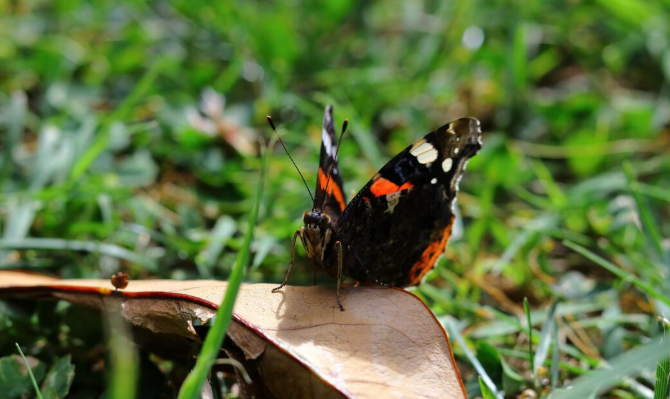
Every winter, people would travel for hours to see something that used to happen in a forest in the Michoacán mountains of Mexico. The oyamel fir trees’ branches would buckle under the combined weight of tens of millions of monarch butterflies, which weigh less than a dime after traveling up to 3,000 miles from the northern United States and Canada. Orange wings fluttered through the air. Some guests compared the sound to a slow downpour through parched leaves. Every December, researchers would hike into that forest to measure the acreage covered by monarchs, but they weren’t merely counting. They were witnessing one of the world’s most remarkable biological phenomena. The forest remains intact. Most of the butterflies that once filled it have vanished.
The largest of the two main populations, eastern monarchs, occupied roughly 7.2 acres of overwintering forest this past winter, up from 4.4 acres the previous year, according to the most recent data from WWF Mexico. That seems like progress on paper. It hardly makes sense in the context. During the first ten years of observation, the average was approximately 21 acres.
| Category | Details |
|---|---|
| Species | Monarch Butterfly (Danaus plexippus) |
| Migration Distance | Up to 3,000 miles — one of the longest known insect migrations |
| Migration Route | Northern U.S. and Canada → California coast (Western) or central Mexico (Eastern) |
| Eastern Population (1996 peak) | ~384 million butterflies |
| Eastern Population Decline | ~90% since the 1990s |
| Western Population (1997 peak) | ~1.2 million butterflies |
| Western Population Decline | ~99% over two decades |
| 2024 Western Winter Count | 9,119 butterflies — down 96% from previous year; second-lowest mark in nearly 30 years |
| 2024–25 Mexico Overwintering Area | ~7.2 acres of forest (up from 4.4 acres prior year; historical average ~21 acres) |
| Primary Threats | Herbicide use (glyphosate/GMO crops), climate change, habitat loss, drought, parasites |
| Key Food Source | Milkweed — sole plant monarch caterpillars can eat; sole plant for egg-laying |
| ESA Listing Status | Proposed as “Threatened” (2024); final ruling delayed to at least late September 2026 |
| Current Administration Stance | Favors voluntary conservation; proposed rolling back ESA to weaker 2019 regulations |
| Key Conservation Groups | WWF Mexico, Xerces Society, Center for Biological Diversity, Native Monarchs |
| Reference Website | https://www.nationalgeographic.com/ |
According to scientists, a sustainable population requires at least 15 acres. The modest recent increase seems to be more due to favorable rainfall along the migration corridor than to any structural recovery, as the eastern monarch has not reached that threshold in years. The weather was favorable. The use of favorable weather is not a conservation tactic.
An even more striking picture is provided by the western population, which spends the winters along the California coast. Recent winter counts of butterflies have consistently dropped into the tens of thousands from an estimated 1.2 million in 1997. 9,119 individual butterflies were counted in 2024, which was the second-lowest number in almost three decades of observation and a 96% decrease from the year before. There isn’t a population decline there.
When most ecologists talk about that population, they are clearly uncomfortable because it is collapsing and barely hanging on. The western monarch has lost about 99 percent of its population since the 1990s. Over the same time period, the population in the east has decreased by about 90%. These are not slow, unclear trends. These are some of the most severe declines in wildlife that have ever been recorded for any species in North America.
Perhaps the most annoying aspect of the entire narrative is that the cause is not mysterious. American farmers started using genetically modified corn and soybean seeds that were designed to resist glyphosate, a herbicide marketed under the Roundup brand, in the early 1990s. Farmers could now spray their entire fields to eradicate rival plants without endangering the crop itself thanks to this modification. In Midwestern farmland, milkweed grew tangled along fence lines and in field margins.
It is the only plant that monarch caterpillars can consume and the only plant on which monarchs lay their eggs. The milkweed vanished once the actual spraying began. In 2004, Chip Taylor, an entomologist at Kansas University who had spent years researching monarchs, received an email from a farmer in the Midwest detailing what was happening to the weeds in his fields. Taylor reportedly experienced something akin to dread while reading the email. What he feared was confirmed by the subsequent data. As herbicide-resistant crops proliferated, monarch numbers started to decline nearly exactly in tandem.
If time and assistance had been provided, the milkweed loss alone might have been manageable. However, the population is no longer able to withstand the additional strain that climate change has placed on them. The chemical makeup of milkweed is changing due to rising carbon dioxide levels. This is affecting the balance of the toxic steroids the plant produces, known as cardenolides, making it less effective against a parasite that attacks monarch caterpillars in their early life stages.
The migration routes that already-stressed butterflies must travel are getting longer due to higher temperatures pushing summer breeding grounds further north. Important rest stops along the migration corridor can be destroyed in a single season by drought, such as the one that wiped out Texas milkweed in 2013. The scientists monitoring this situation are dealing with uncertainty piled on top of uncertainty, and their best estimates are not comforting because each of these pressures exacerbates the others in ways that are challenging to accurately model.
The situation has long been known to the federal government. The U.S. Fish and Wildlife Service officially determined in December 2020 that it was scientifically justified to list the monarch as threatened under the Endangered Species Act. For four more years, that conclusion remained unresolved. In late 2024, the listing was suggested by the Biden administration.
The Trump administration took office before it could be made official, delaying the final decision until at least late September 2026. Since then, two environmental groups have sued to impose a legally binding deadline. Citing economic priorities, the current administration has expressed a preference for locally driven, voluntary conservation over federal regulation.
It’s still unclear if that strategy will result in any significant protection on the timeline the monarch truly requires, which is measured in migration seasons rather than years of administrative process. Each migration season represents a new generation of butterflies attempting the journey with less habitat, less milkweed, and less margin for error than the previous one.
It would be dishonest to ignore the small reason for cautious optimism. The recent two-year increase in Mexican overwintering numbers indicates that sporadic milkweed restoration initiatives, such as small prairie restorations throughout the Great Plains, highway median plantings in the Midwest, and backyard gardens in New York City, are providing enough of a foothold to slow the decline.
One of the top monarch researchers in the nation, Karen Oberhauser, has stated that individual conservation efforts can have a quantifiable impact and that the population seems to have entered a phase of relative stability. Seeing that evaluation next to the 9,119 butterflies counted in the West is an exercise in juggling two challenging realities. In one population, the decline might have slowed. The other is hovering around figures that a generation ago would have been deemed disastrous. This winter, the branches of the Michoacán forest still bear some weight. However, not nearly enough.