
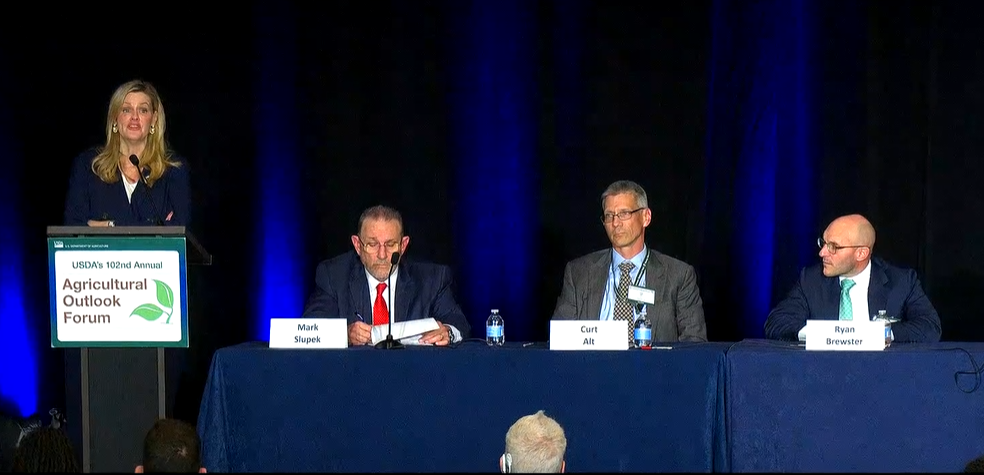
The U.S. Department of Agriculture is intensifying efforts to expand agricultural export opportunities through a comprehensive portfolio of market development programs and strategic initiatives. During a recent panel session, Michelle Bekkering, Deputy Under Secretary for Trade and Foreign Agricultural Affairs at the USDA, outlined how the department is mapping global opportunities and providing tools to help American agriculture navigate the changing face of market development in international trade.
Bekkering emphasized that agricultural exports are vital to both rural communities and the national economy. According to the deputy under secretary, U.S. agricultural exports currently support over 1 million jobs and generate $185 billion in additional economic activity, demonstrating the critical importance of global trade to American farmers and producers.
USDA Market Development Programs Drive Export Growth
The Trade and Foreign Agricultural Affairs mission area, which oversees the Foreign Agricultural Service and the U.S. Codex Office, plays a central role in promoting American agricultural competitiveness abroad. These entities work to remove non-tariff technical barriers and increase global demand through targeted marketing expertise and trade facilitation efforts.
Mark Slupek, Deputy Administrator of Global Programs at FAS, provided context on the department’s long-standing commitment to market development. According to Slupek, these programs trace their origins back to the 1950s and have continuously evolved to address changing international market conditions.
Traditional Programs Form Foundation of Export Strategy
The Market Access Program represents one of the USDA’s primary export promotion tools, with annual funding of $200 million. This program provides cost-share assistance for trade shows, market research, educational seminars, and both generic and branded product promotions, according to program officials.
Additionally, the Foreign Market Development Cooperator Program focuses on trade servicing and technical assistance for generic commodities. The program, created in the 1950s, often funds cooperator offices and staff stationed overseas to provide continuous market support.
The Emerging Markets Program targets smaller, developing markets through research and technical assistance. Meanwhile, the Technical Assistance for Specialty Crops program helps U.S. organizations address trade barriers specific to specialty crop exports, and the Quality Samples Program funds the procurement and shipment of product samples to demonstrate proper usage in targeted markets.
New Initiatives Target Emerging Market Opportunities
In late 2023, the USDA launched two significant initiatives designed to expand market development efforts beyond traditional trade partners. The Regional Agricultural Promotion Program received $600 million in funding to diversify export destinations, with particular emphasis on South and Southeast Asia, Latin America, the Middle East, and Africa.
The Assisting Specialty Crops Exports Initiative complements RAPP with $100 million dedicated specifically to helping specialty crop industries overcome non-tariff barriers. According to officials, this program establishes continuous dialogue between FAS and industry stakeholders to address emerging trade challenges proactively.
Credit Programs Reduce Financial Risk for Exporters
The USDA also provides critical financial support through credit guarantee programs that facilitate agricultural trade. The GSM-102 program guarantees letters of credit to ensure American exporters and their banks receive payment, currently covering 135 destination countries and involving 78 approved foreign financial institutions.
In contrast to short-term credit guarantees, the Facility Guarantee Program supports longer-term infrastructure financing projects that enhance the capacity to handle U.S. agricultural exports. These programs collectively reduce financial risk and encourage exporters to pursue new market opportunities.
However, the success of these market development programs will depend on continued funding and adaptation to evolving trade dynamics. As Bekkering noted during the panel, the trade markets of today differ significantly from those of the past, requiring ongoing vigilance and strategic adjustment to maintain American agricultural competitiveness in the global marketplace.
