
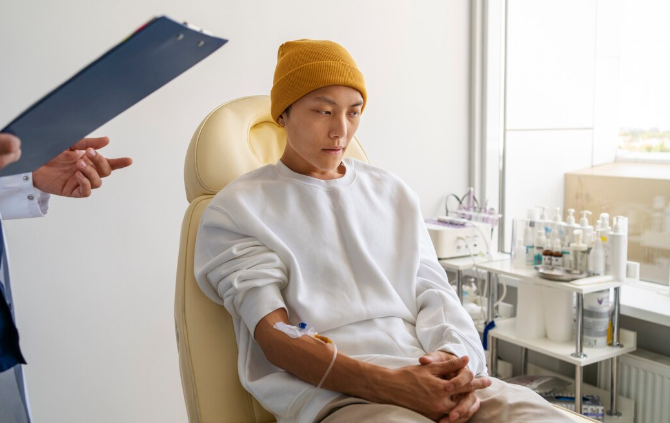
It begins softly. A little weariness that lasts longer than it should. Perhaps a change in bowel habits that is bothersome but not concerning. A 32-year-old is half-listening to a nurse calling names while scrolling through their phone in a packed clinic waiting area. They are not thinking about cancer. It’s not meant to be.
Previously thought to be an age-related illness, colorectal cancer is now affecting people in their 20s, 30s, and even late teens. Although the numbers have been gradually increasing for years, the recent change feels more like an unsettling development than a trend. Approximately one in five diagnoses nowadays affect a person under 55. That in and of itself would be unexpected. The fact that it is now one of the main causes of cancer-related death in younger adults is even more concerning.
| Category | Details |
|---|---|
| Disease | Colorectal Cancer (CRC) |
| Age Trend | Rising sharply under age 50 |
| Key Statistic | 1 in 5 diagnoses now under 55 |
| Mortality Trend | Leading cause of cancer death in young adults |
| Growth Rate | Increasing ~2–3% annually in under-50 group |
| Risk Factors | Diet, obesity, inactivity, alcohol, smoking |
| Detection Challenge | Often diagnosed at advanced stages |
| Screening Shift | Recommended starting age lowered to 45 |
| Unknown Factor | Microbiome and environmental exposure |
| Reference | https://www.cancerresearch.org |
Physicians at hospitals such as Yale’s Smilow Cancer Center have begun to observe patterns that don’t exactly match the textbooks they were taught. weeks in which the majority of newly diagnosed colorectal cancer patients are under 40. instances in which symptoms were written off as minor problems by patients and occasionally even by medical professionals. diet, stress, and hemorrhoids. Something doable. Something transient.
Younger patients are not routinely screened, in contrast to older adults. Nowadays, colonoscopies usually start at age 45 instead of 50, but even that seems late when diagnoses are coming in earlier. The illness has progressed by the time many young patients receive a diagnosis. Concerning is not only the existence of cancer, but also how late it is discovered.
The causes of the increase are still frustratingly unknown. Lifestyle factors, such as processed foods, sedentary lifestyles, and the rise in obesity, are cited by researchers. At lunchtime, you can observe patterns emerging in any urban office: hurried meals, extended workdays at desks, and limited movement to brief commutes between screens. These behaviors are widespread. Nearly typical.
The complex ecosystem of bacteria that reside inside the human digestive system, known as the gut microbiome, is another topic of increasing interest. Modern diets, the use of antibiotics, and exposure to the environment may be changing this balance in ways that raise the risk of cancer, according to some scientists. Although it is an intriguing theory, it is still unfinished. Too many variables are out of alignment and there are too many unknowns.
The majority of these cases don’t seem to be explained by genetics, which was once thought to be a major driver. Physicians are seeing patients with aggressive forms of the disease who have no family history and no overt warning signs. A different kind of tension is added by that randomness. It casts doubt on the notion that risk can always be anticipated or controlled.
In discussions with clinicians, there is a moment that sticks out. Rectal bleeding was initially ignored for months by a young patient in their mid-30s. Work deadlines, family obligations, and minor diversions that seemed more pressing than a trip to the doctor were all part of life’s hectic schedule. The diagnosis had changed from something treatable to something much more complex by the time they sought medical attention.
In the meantime, the data shows an odd contrast. Over the past few decades, there has actually been a significant decrease in the overall cancer mortality rate among younger people. Real and quantifiable progress has been made in medicine. Colorectal cancer, on the other hand, stands out, travels in the opposite direction, and silently rises as other cancers fall.
The general public’s awareness is still lacking. Many people still find it hard to believe that a person in their 20s could have colon cancer. There is reluctance—the belief that it’s something less serious—even among those who are exhibiting symptoms. Although it makes sense, this assumption might be costing patients time. Here, perception lags behind reality due to a sort of cultural lag.
Physicians are beginning to advocate for earlier discussions. Something more akin to attentiveness rather than a comprehensive screening for all individuals under 40. paying attention to symptoms. Considering them. taking action earlier. It’s a change in perspective as much as a change in legislation.
It’s unclear if that will be sufficient. The wider ramifications go beyond the field of medicine. A diagnosis in your 30s affects not just your health but also your career, finances, and family. Fertility, long-term care, and insurance decisions become pressing issues rather than far-off possibilities. Cancer has a different weight because it appears earlier.
And then there’s the question that permeates everything: why now? Why this particular generation?
A “birth cohort effect” is a term used by some researchers to describe the idea that individuals who were born more recently are more frequently and earlier exposed to risks. Lifestyle, environment, and diet are all factors that build up over time and influence results in ways that are not yet fully apparent. It makes sense as an explanation. However, it doesn’t feel finished.
Perhaps it shouldn’t. This issue is becoming increasingly urgent. Not quite panic. It’s more akin to a gradual awareness that something basic has changed. The outdated presumptions regarding age, risk, and timing are no longer valid.
As you watch it happen, you get the impression that there is more to the story than just cancer. It has to do with how slowly we adapt to change, even in the face of overwhelming evidence. The illness is progressing more quickly. It’s still catching up.