
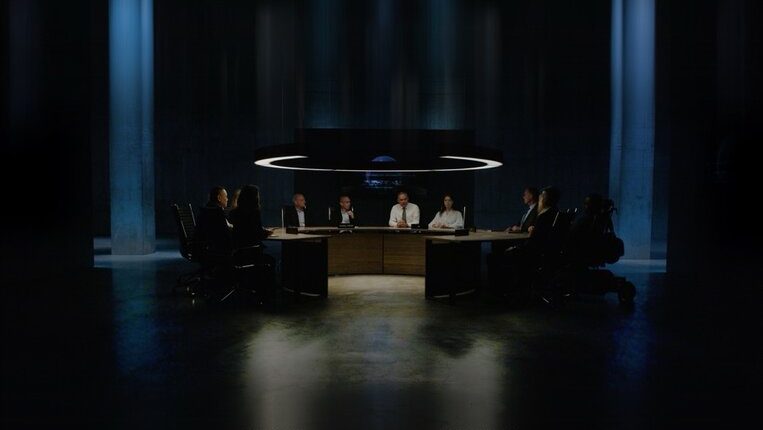
Oscar-winning filmmaker Elena Andreicheva brings artificial intelligence under scrutiny in her new documentary “Intelligence Rising,” which examines AI regulation through military-style war games. The film world premieres on March 15 in the F:act Award section of the Copenhagen International Documentary Film Festival, CPH:DOX, which runs through March 22. Andreicheva, known for her Oscar and BAFTA-winning short “Learning to Skateboard in a Warzone (If You’re a Girl),” assembles global experts to simulate future AI scenarios.
The documentary features AI entrepreneur Marc Warner, CEO of Faculty AI, alongside military strategists, economists, and philosophers including former British Army head General Patrick Sanders, Skype creator Jaan Tallinn, and author Yuval Noah Harari. According to the festival, the film explores how artificial intelligence might reshape global power structures when the world’s brightest minds confront the technology they helped create.
War Games Simulate AI Regulation Challenges
The documentary utilizes war game exercises to test tactical responses to potential AI developments. These strategy simulations place decision-makers under pressure by recreating aspects of future conflicts involving artificial intelligence. The participants represent various nations and entities racing for AI supremacy, according to information from the festival.
Warner, who co-founded Faculty AI to help organizations make better decisions using AI, reportedly spent most of his life developing artificial intelligence technology. However, the CPH:DOX website notes he now questions whether that was beneficial. His personal concerns about AI’s future prompted the documentary project.
Genesis of the Documentary Project
Andreicheva explained the film originated from her friendship with Warner, who was her lab partner at university. According to the director, Warner contacted her after his son’s birth, proposing a war game format to explore crucial questions about AI regulation and development. The filmmaker recognized the documentary potential in bringing experts together to address these pressing issues.
The documentary intersperses war game scenes with footage of Warner and his young son Tommy. Additionally, these family moments serve as an analogy for how AI learns, according to Andreicheva. The director emphasized she wanted to demystify AI technology and reject the notion that it’s too complicated for general understanding.
Artificial Intelligence as Agent Versus Tool
One memorable sequence shows experts debating Artificial General Intelligence scenarios, where AI matches or surpasses human cognitive abilities. The teams representing China and the United States grapple with escalating situations while attempting to maintain control. Meanwhile, philosopher Harari argues in the film that AI functions as an agent rather than a tool, potentially even an alien agent.
The filmmaker revealed that for AI to reach its full potential, it requires internet connectivity, vast data access, and significant operational freedom. However, this creates a fundamental tension in AI regulation, as effective intelligence requires capabilities that make containment difficult. Andreicheva noted this realization emerged as a key learning for participants who assumed governments could simply deactivate AI systems.
Documentary Team and Distribution
Andreicheva directed and produced “Intelligence Rising” alongside Sean Richard, Mandy Chang, and Paula Comley. Harry Truman handled cinematography, while Bradley Richards, Angus Sutherland, and Frank Frumento edited the documentary. Autlook Filmsales manages international distribution for the film.
Assembling the high-caliber expert lineup proved challenging, according to the filmmaker. In contrast to her usual development process, this project required coordinating schedules and commitments from globally prominent figures. The combined efforts of the film team and Warner’s network ultimately secured participation from military leaders, tech innovators, and policy experts.
Director’s Takeaways on AI Future
Andreicheva shared that processing the implications took considerable time, noting she experienced her first AI-related nightmare approximately eighteen months into production. The director concluded that reversing AI development appears unlikely, though predicting its transformation direction remains difficult. She hopes the documentary reaches policymakers in positions of power.
The filmmaker encourages audiences to consider fundamental questions about humanity’s future relationship with AI technology. According to Andreicheva, viewers should contemplate whether society wants a world where automation replaces human work. She emphasizes the importance of thinking proactively about technological change and its implications for daily life.
Following its Copenhagen premiere, the documentary’s broader release schedule and potential festival circuit appearances have not been confirmed. The film represents a timely contribution to ongoing debates about artificial intelligence regulation as governments and organizations worldwide grapple with policy frameworks.
