
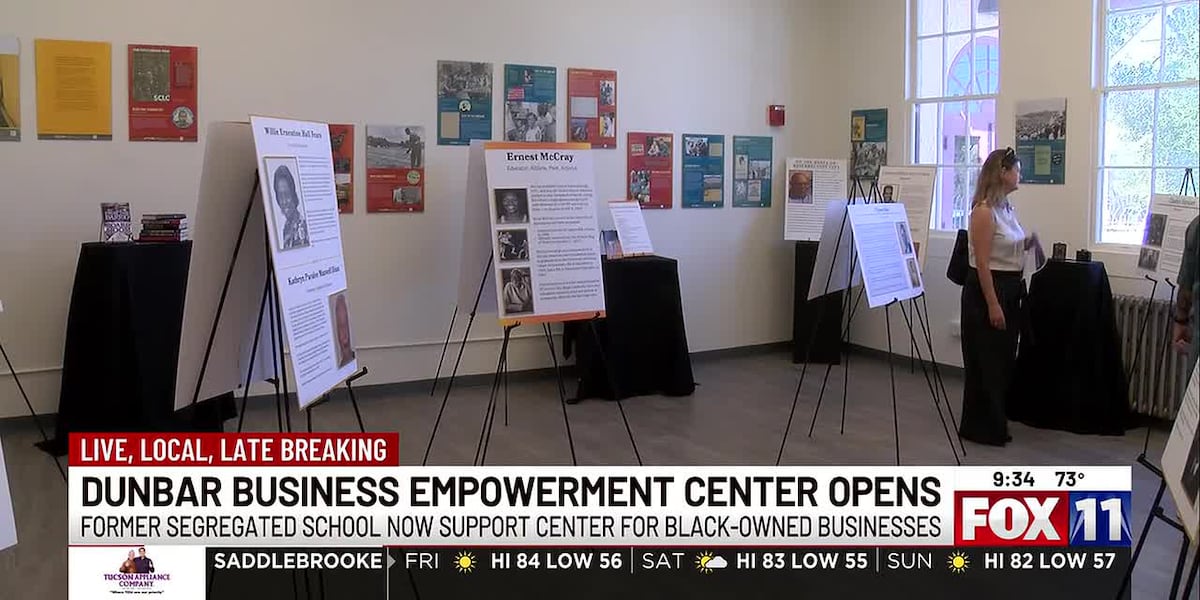
The Dunbar Pavilion in Tucson, Arizona, has officially opened its new Business Empowerment Center after months of renovation work. The community hub is designed to support Black-owned businesses and entrepreneurs through professional workspaces, meeting areas, and business development resources, according to the Dunbar Pavilion. The Business Empowerment Center aims to create lasting economic opportunities for Tucson’s African American community.
Freda Marshall, executive director of the Dunbar Pavilion, presided over the ribbon-cutting ceremony for the facility. The center is expected to operate Monday through Friday from 9 a.m. to 5 p.m. in the coming days, offering entrepreneurs a space to learn business fundamentals and collaborate with other community members.
Historic Building Transformed Into Modern Business Hub
The $1.1 million renovation project converted a portion of the historic campus, originally built in 1943, into a modern small business center. According to Marshall, the goal was to honor the building’s history while creating functional space for today’s entrepreneurs and startups. The funding came partially through a Community Development Block Grant from the U.S. Department of Housing and Urban Development, administered by the City of Tucson.
Inside the renovated space, a former locker room now houses conference and meeting areas designed for entrepreneurs who may not yet have a storefront location. Marshall explained that the Business Empowerment Center will provide resources on writing business plans, securing business funding, and community collaboration. The facility offers networking opportunities with the ultimate goal of helping businesses graduate to their own brick-and-mortar locations.
Community Leaders Celebrate Decades of Investment
Congresswoman Adelita Grijalva attended the opening ceremony and expressed enthusiasm about the center’s potential impact. Both Grijalva and Marshall acknowledged the late Congressman Raúl Grijalva as instrumental in securing the federal funding that made the renovation possible. According to Grijalva, the center represents the culmination of decades of community work and investment.
However, the building’s significance extends far beyond its current purpose. The Dunbar Pavilion was once Tucson’s only segregated school, serving as a symbol of both past discrimination and present progress. Following Arizona’s statehood in 1912, the state constitution mandated that African American children attend segregated schools, leading to the establishment of Tucson’s first African American school in 1913.
From Segregation to Empowerment
By 1918, African American students in Tucson were moved to the newly constructed Dunbar School on West 2nd Street. The facility served as the city’s only segregated school for more than three decades until integration occurred in 1952, when it was renamed John Spring Junior High. Today, the century-old building at 325 West 2nd Street serves multiple programs supporting Tucson’s African American community.
Additionally, the historic campus includes classrooms used as meeting spaces and an auditorium available for various gatherings. The nonprofit organization relies on grants and donations to maintain operations. Marshall emphasized that the Business Empowerment Center renovation was carefully executed to preserve the building’s historical significance while meeting modern needs.
Meanwhile, community leaders view the center as more than just a workspace. The facility represents an opportunity for Black entrepreneurs to build generational wealth and establish lasting legacies in Tucson. The emphasis on business education and networking creates a supportive ecosystem for entrepreneurs at various stages of development.
The Dunbar Pavilion plans to provide ongoing updates about utilizing the Business Empowerment Center through its website. While specific programming details and enrollment procedures have not been fully announced, interested entrepreneurs are encouraged to monitor the organization’s communications channels for additional information about accessing the new facility and its resources.
