
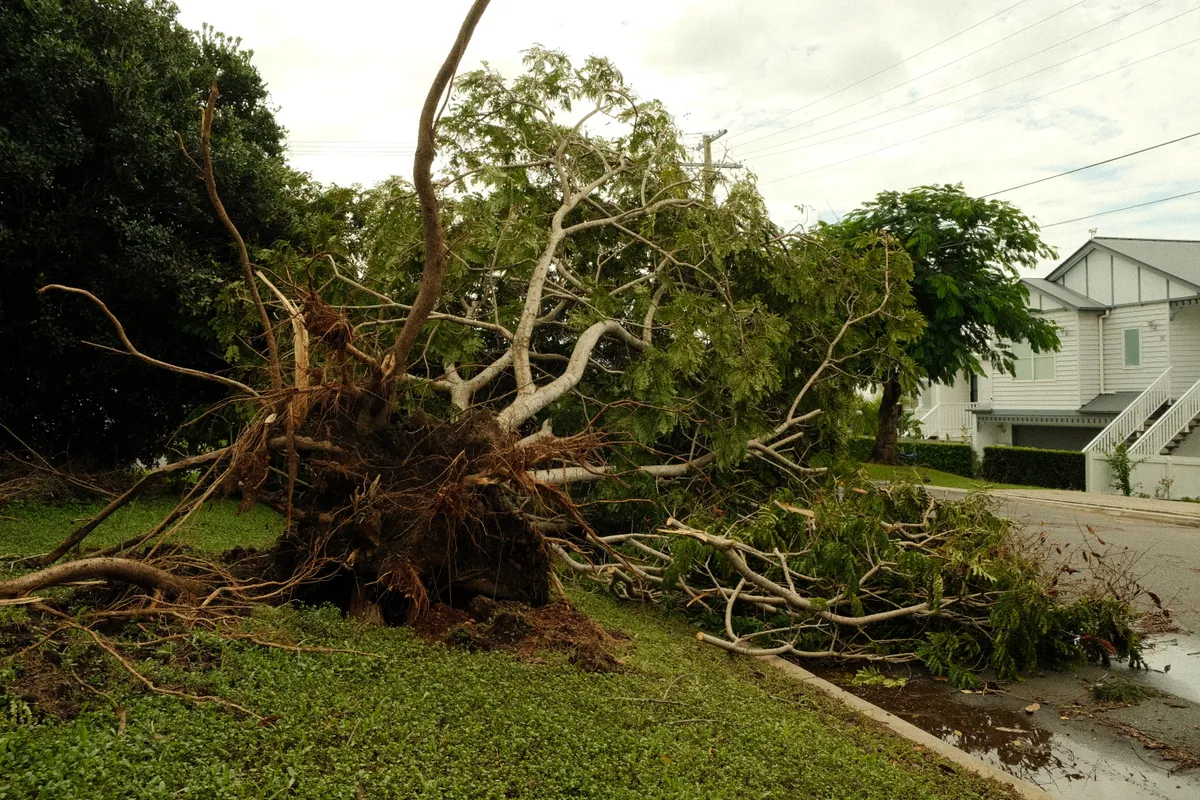
Allstate catastrophe loss risk is the central tension hanging over ALL shares right now, even after the company posted one of its strongest quarters in years and beat Q1 earnings estimates by nearly $3 per share.
| Metric | Value |
|---|---|
| Q1 2026 GAAP net income | $2.4B ($10.65/share) |
| Q1 2026 adjusted net income | $2.8B ($10.65/diluted share) |
| Q1 combined ratio (property-liability) | 82.0 vs. 97.4 a year ago |
| April 2026 cat losses (pre-tax / after-tax) | $870M / $687M |
| Consensus price target (21 analysts) | $240.33 (Moderate Buy) |
| Next earnings date / Q2 EPS estimate | July 29, 2026 / $4.64 |
Q1 Numbers Were the Best in Years
The first quarter of 2026 came in at $2.4 billion in GAAP net income, or $10.65 per share. That beat the analyst consensus by roughly $3 a share. But the adjusted figure tells the fuller story: adjusted net income reached $2.8 billion for the quarter, a figure not captured in the GAAP headline.
The property-liability combined ratio collapsed to 82.0 from 97.4 in the year-ago quarter. Anything below 100 means the insurer is making money on underwriting alone, before investment income is counted. At 82, Allstate is generating roughly $18 of underwriting profit for every $100 in premiums collected.
Auto premiums earned rose 2.1% to $9.5 billion. Homeowners premiums jumped 13.9% to $4.2 billion. Investment income hit $938 million, up nearly 10% year-over-year. Total revenue climbed 3% to $16.9 billion.
For context, Allstate lost $1.4 billion in 2022 and $316 million in 2023. The stock bottomed around $100 at the trough. It has roughly doubled since the recovery began in mid-2023.
Allstate Catastrophe Loss Risk: April Was a Reality Check
Then came storm season. On May 21, Allstate filed an 8-K with the SEC disclosing that April catastrophe losses hit $870 million pre-tax across 10 separate wind and hail events. The after-tax figure was $687 million, with roughly 70% of the damage tied to just two storms.
That disclosure landed just days after ALL hit its 52-week high. The Allstate catastrophe loss risk is not theoretical — a single bad month can erase a meaningful chunk of a quarter’s underwriting profit. The combined ratio improvement that drove Q1 results depends partly on benign weather cooperating, and April showed how quickly that can flip.
No underwriting discipline eliminates tornado season. Allstate can tighten standards, reprice, and pull from exposed markets. It cannot opt out of severe convective storms hitting its policyholders.
Dividend and Analyst Positioning
On the income side, Allstate raised its quarterly common dividend nearly 9% to $1.08 per share in February, continuing a five-year annualized growth rate of 13%. The board also declared roughly $29.3 million in aggregate preferred stock dividends for the period running April 15 through July 14, 2026, payable July 15.
The current dividend yield sits near 2%, which is not exceptional for a financial sector holding but carries credibility given the payout growth trajectory.
Of 21 analysts covering ALL, 11 rate it Buy and nine Hold. One Sell. The average 12-month price target is $240.33, implying roughly 11% upside from current levels around $216. The high target is $268; the low is $208.
The Allstate catastrophe loss risk is already baked into those cautious consensus numbers to some degree. Analysts covering P&C insurance model cat load every quarter. The question is whether April’s $870 million pre-tax hit represents a normal bad month or the opening of a more active storm cycle.
What Changes Next
The next hard data point arrives July 29, when Allstate is expected to report Q2 2026 results. Analysts are currently modeling $4.64 in Q2 EPS — a steep drop from Q1’s $10.65, partly reflecting the April cat losses already disclosed.
If May and June losses stay contained, the Q2 print could surprise to the upside on that conservative baseline. If storm activity continues at April’s pace, the combined ratio could reverse sharply and the current Moderate Buy consensus faces pressure.
The setup into earnings: a low bar on cat assumptions, a strong reserve base coming in, and a binary outcome tied largely to how many storms hit between now and June 30.