
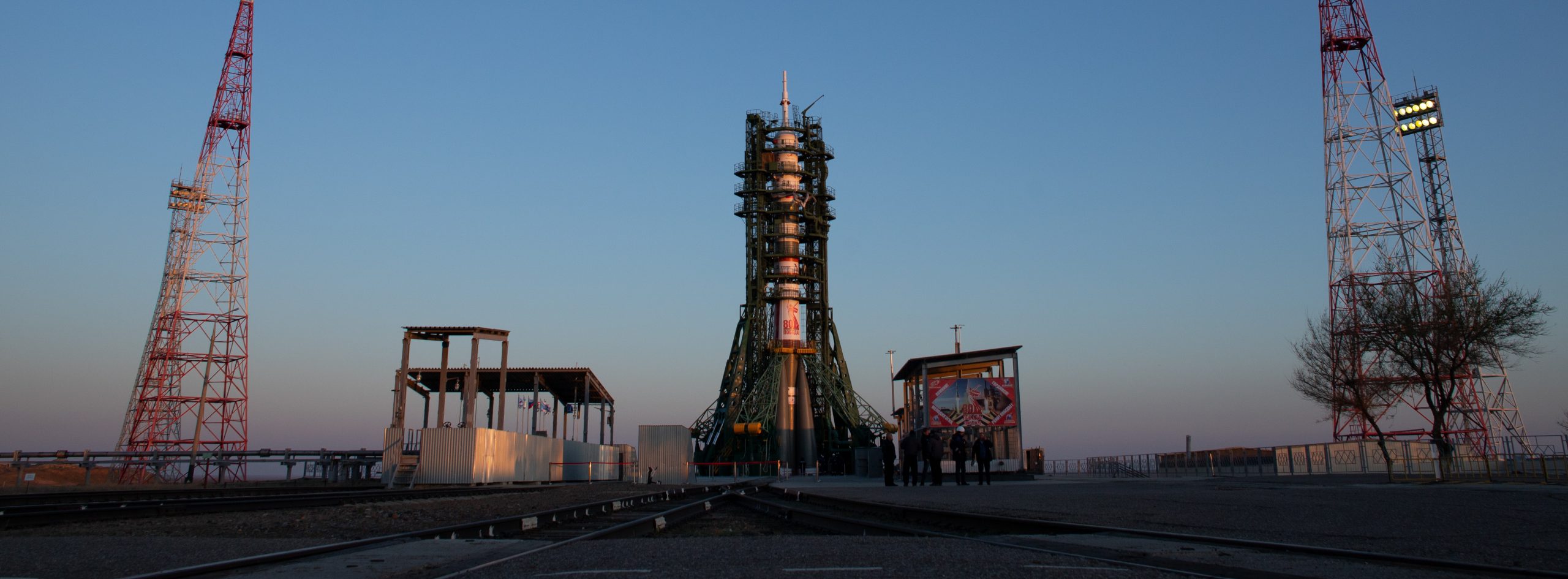
Kazakhstan faces a critical decision point as it seeks to define its role in the rapidly expanding global space economy. The Central Asian nation must choose between becoming a strategic broker of space technology and artificial intelligence solutions or risk being relegated to a passive player in a geopolitical competition among major powers, according to senior officials and policy experts. With the global space economy projected to reach $1.8 trillion by 2035, Kazakhstan’s strategic choices today will determine whether it captures lasting value from its unique space assets or becomes merely a launch site for others.
The country’s position is anchored by the Baikonur Cosmodrome, a legacy space facility with decades of operational history, combined with Kazakhstan’s track record of nuclear disarmament and adherence to international space treaties. However, officials warn that possessing strategic infrastructure without exercising strategic agency could leave the nation vulnerable in an era where space infrastructure and deeptech supply chains are becoming central to geopolitical power.
Kazakhstan Space Economy Strategy Requires Active Leadership
According to a recent analysis by Kazakhstan government officials and advisors, the nation’s path forward depends on moving beyond passive balancing of major powers. The Kazakhstan space economy strategy must involve confident orchestration that prioritizes national interests while maintaining multi-directional partnerships with Russia, China, Europe, and the United States. Each relationship brings distinct advantages, from Russia’s cultural and scientific ties to China’s supply chain position, Europe’s governance models, and America’s innovation legacy.
However, neutrality without agency no longer provides stability in the current geopolitical environment, the officials caution. Instead, Kazakhstan must leverage its trusted position to shape the rules of the emerging space sector rather than allowing others to dictate terms on its territory.
Two Distinct Paths for Space Technology Development
The analysis outlines two potential scenarios for Kazakhstan’s future. In the first path, Kazakhstan becomes a trusted broker that orchestrates Eurasian space and deeptech cooperation. This approach would transform the country from a launch host to a system integrator, with its engineers and scientists serving as core contributors to global missions and supply chains rather than peripheral contractors.
Additionally, the brokerage model would position Kazakhstan to convene forums on dual-use technology governance, satellite data security, and responsible AI in space systems. By anchoring multilateral partnerships across space robotics, collaborative autonomy, data processing, and climate services, Kazakhstan could accumulate strategic influence as a neutral, value-adding orchestrator trusted by multiple parties.
In contrast, the second scenario involves Kazakhstan remaining operationally relevant but strategically passive. In this outcome, the country’s space and AI assets would be used by others while high-value research, intellectual property, and decision-making migrate elsewhere. The nation would become a transit zone rather than a co-creator, with launches occurring but strategic value leaking away.
Institutional Reforms Essential for Space Sector Growth
Meanwhile, experts emphasize that brokerage requires substantial institutional development. Professionalized national agencies, entrepreneur-friendly technocracy, rule of law, credible intellectual property protection, and sustained investment in human capital are described as non-negotiable prerequisites. Without these foundations, neutrality becomes hollow and strategic assets risk decaying through underuse of agency rather than outright neglect.
The space technology development opportunity extends beyond rockets to encompass AI-enabled earth observation, satellite-enabled logistics, robotics, advanced materials, and secure data infrastructure. Space is transitioning from a prestige domain to an industrial platform, and countries that broker cooperation, standards, and talent flows will capture durable economic value, according to the analysis.
Urgency Driven by Fast-Moving Competition
The window for Kazakhstan to establish itself as a strategic broker is narrowing, officials warn. Space entrepreneurship now operates on fast cycles driven by digital-native firms and venture ecosystems. Once standards, partnerships, and data architectures consolidate elsewhere, late entry becomes prohibitively expensive, and credibility compounds early or evaporates.
Economically, the brokerage approach could accelerate diversification through space-enabled climate analytics, smart logistics, and secure data corridors that reinforce Kazakhstan’s role as a Eurasian connector. Deeptech hubs linked to Baikonur and Astana could attract global capital and talent, making space an innovation catalyst that unifies sectors across the economy.
The coming months will reveal whether Kazakhstan pursues the institutional reforms and strategic investments necessary to become an active space economy broker or defaults to a more passive role. Officials have not specified concrete implementation timelines, though they emphasize that decisions made now will have lasting consequences for the nation’s technological sovereignty and economic positioning in the decades ahead.
