
There is nothing particularly noteworthy about the entrance to Bender’s Cave. This sinkhole is located in Comal County, Texas. It is one of hundreds that are dispersed throughout the Edwards Plateau, where the limestone bedrock has been eroding and collapsing for millions of years. As a result, the area is subtly filled with rivers, voids, and underground passageways that most people pass by without realizing they exist. Since the 1990s, Cavers had been mapping Bender’s.
They were aware of the chilly water waiting at the bottom, the crawlspace you must traverse to get there, and the subterranean stream that flows through its lower passageways. They were unaware that the stream bed was covered in bones because no paleontologist had ever conducted a formal examination. Not a couple of bones. After his first descent, Dr. John Moretti of the University of Texas at Austin described it as “bone everywhere.” “There were fossils everywhere, just everywhere, in a way that I haven’t seen in any other cave,” he stated. “It was just bones all over the floor.”
Bender’s Cave Discovery — Texas Ice Age Fossil Site (2026)
| Discovery site | Bender’s Cave — Comal County, Texas; a “water cave” containing active underground rivers and streams; three known sinkhole entrances; explored by cavers since the 1990s but never formally investigated by paleontologists until 2026 |
| Lead researcher | Dr. John Moretti, University of Texas at Austin — conducted fieldwork alongside local caver John Young over more than a year with multiple site visits |
| Publication | Study published March 2026 in the journal Quaternary Research |
| Cave entry method | Descend ~11 meters via sinkhole #2, navigate elongated underground fissures to a crawlspace, then enter flowing underground stream passage — some fossils retrieved using masks and snorkels in the submerged stream |
| Common species found | Mammoth, bison, horse, camel (Camelops) — all species previously documented in Central Texas; consistent with known dry, open grassland ecosystem picture |
| Anomalous species found (key) | Hesperotestudo (extinct giant tortoise) and Holmesina septentrionalis (pampathere — a prehistoric armadillo relative that grew to roughly lion size); neither species was thought to exist in this region due to climate incompatibility |
| Additional significant finds | Jefferson’s ground sloth, mastodon, saber-tooth cat fragments — all animals associated with forested or warm, humid habitats rather than dry grasslands |
| Estimated age of fossils | Tentatively dated to the last interglacial period — a warm interval roughly 100,000 years ago; radiocarbon dating attempted but definitive dates pending due to lack of surrounding geologic material |
| What the find challenges | The prevailing scientific model that Ice Age Central Texas was consistently dry, cool, and open grassland — the presence of warm-climate species suggests the region was once significantly warmer, wetter, and more forested than accepted records indicate |
| Climate science implication | The animal assemblage collectively points to a past warm, humid, frost-free environment in what is now an arid region — with direct parallels to projected future climate conditions for Central Texas under current warming trajectories |
| Broader significance | Moretti notes that many more Texas water caves remain scientifically uninvestigated; each could contain similarly disruptive paleoclimate records from poorly documented prehistoric intervals |
The journal Quaternary Research has published what Moretti and local caver John Young recovered from that underwater passage, which involved snorkeling in wetsuits through a subterranean stream and gathering shell fragments and bone shards from the silt. The results are truly unsettling to anyone who believed that Central Texas’s Ice Age history was fairly well understood. Because Bender’s Cave’s animals don’t fit the intended landscape.
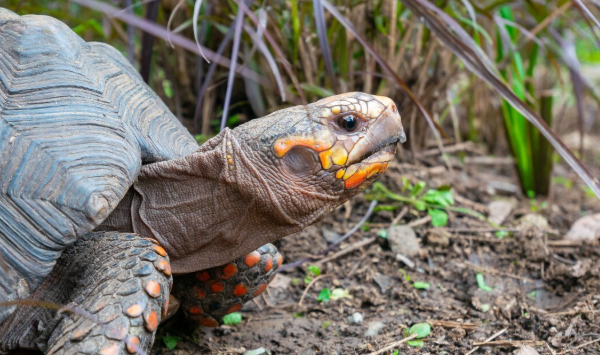
Mammoths, bison, horses, and camels appear to be a fairly familiar inventory for an Ice Age Central Texas site. They were present. However, in the same sediment layers with the same patterns of mineralization and preservation, there were two species that, based on everything previously documented in the scientific literature, had no right to be in this region of Texas. The first is Hesperotestudo, an extinct giant tortoise whose surviving relatives need warm, humid, frost-free habitats. Cool, dry grasslands are not ideal for giant tortoises. They are unable to. The second is Holmesina septentrionalis, a pampathere, a prehistoric relative of the armadillo that shared the same predilection for warm, humid environments and could grow to about the size of a lion. A massive ground sloth, pieces of a mastodon, and what looked to be the remains of a saber-tooth cat completed the image. These creatures are typically found in wooded areas rather than open ones.
If you were to look at each of these separately, you might be tempted to dismiss any one of them—a tortoise venturing beyond its typical range, for example, or a single unusual specimen. When considered collectively, the group is more difficult to ignore. It presents a cogent ecological narrative. At some point in the late Pleistocene, Central Texas was not the arid, open grassland that paleontologists had depicted it as for decades. The temperature was higher. It was wetter. Forested, perhaps. A location where lion-sized armadillos foraged and giant tortoises nested, and where the climate was more like that of the Gulf Coast than the Edwards Plateau. Although Moretti is cautious to point out that definitive radiocarbon dating is still challenging due to the lack of surrounding geologic material to anchor the specimens in time, he tentatively dates the fossils to the last interglacial period, a warm interval that occurred roughly 100,000 years ago, between two glacial advances.
Beneath the surface of this discovery, there is something subtly striking about the implications for the climate. The temperature difference between the last interglacial period and pre-industrial averages was about 1 to 2 degrees Celsius, which is within the range of warming scenarios that are currently being actively discussed for the upcoming century. The question of what a similar change might result in the area in the future becomes much less abstract if that small increase was sufficient to change Central Texas from a dry grassland to the kind of warm, humid, forested environment where giant tortoises and pampatheres could flourish 100,000 years ago. Bender’s Cave’s bones are more than just historical artifacts. They are more akin to a precedent.
Moretti’s observation that Bender’s Cave is not unique in its potential—just in having been examined—is what gives this discovery a truly open-ended feel. He believes that many more water caves in Central Texas are still entirely unexplored by paleontologists, and that their subterranean streams may contain similarly disruptive fossil records from periods of prehistoric climate that are not fully taken into account by current models. A more comprehensive image of Ice Age Texas, constructed cave by cave and stream by stream, might differ significantly from the one that has been put together using only surface sites and dry caves.
There’s a sense that the natural world still holds secrets we haven’t yet considered searching for when we witness discoveries like a paleontologist in a wetsuit pulling up the bones of animals that shouldn’t have been there in an underground river. Giant tortoises from a warmer, wetter era are not readily found on the Edwards Plateau. Finding them there is important because of this. Once, the scenery was different. If someone is willing to get wet enough to look, the evidence is in the water.
