
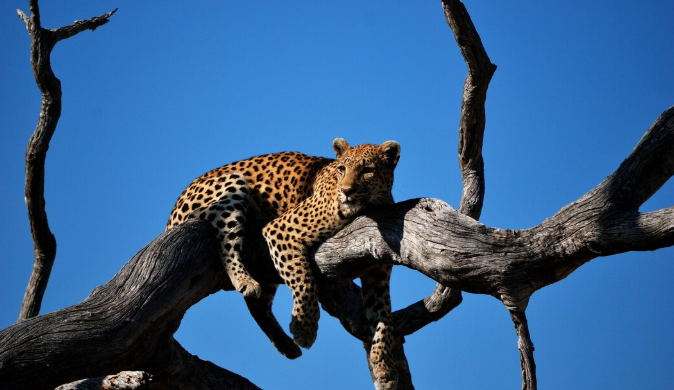
When a forest’s apex predator disappears, a certain kind of silence descends upon it. The prey animals exhibit different behaviors, such as being less cautious when grazing and being bolder close to the water’s edge. The vegetation shifts. The entire ecosystem undergoes abrupt, irreversible changes that are initially almost undetectable. This silence has spread over the past 20 years for anyone who has spent time in the Atlantic Forests of northeastern Argentina and southern Brazil. Furthermore, it’s hard not to question whether the fight began ten years too late, despite the fact that conservationists have battled valiantly and genuinely to push it back.
On paper, the Brazil-Argentina Green Corridor seems enormous. Approximately 500,000 acres of subtropical rainforest spanning two national parks, Iguazú on the Argentine border and Iguaň on the Brazilian side. With about 275 separate cascades tumbling through mist and clouds, it has the largest waterfall system on Earth and is one of those locations that momentarily humbles you. However, beauty hasn’t shielded it. The number of jaguars in this corridor had drastically decreased from 400 to 800 by 2005. By 2009, researchers were only counting nine or eleven people on the Brazilian side alone. Nine. It is not a population. It’s an extinction waiting room.
| Category | Details |
|---|---|
| Subject | Jaguar (Panthera onca) Conservation Crisis |
| Geographic Range | 18 countries — Mexico to Argentina |
| Current Population Estimate | Approx. 64,000–173,000 (declining) |
| Critical Habitat Zone | Brazil-Argentina Green Corridor, Atlantic Forest |
| Corridor Size | 457,000 acres (Iguazú/Iguaçu National Parks) |
| Population Low Point (2005) | ~40 jaguars in the Green Corridor |
| Current Green Corridor Population | At least 105 jaguars |
| Primary Threats | Habitat loss, livestock conflict, poaching, fragmentation |
| Key Conservation Organization | Panthera, WWF, Wildlife Conservation Society |
| IUCN Status | Near Threatened (population declining) |
| Reference Website | panthera.org |
This was not a random event. Between 2000 and 2020, the state of Paraná lost 13% of its forest cover. The roads and ranches that took the place of those trees not only removed habitat but also isolated it. The home ranges of jaguars are enormous. They require connected space on a daily basis, just as humans require oxygen. The animals are unable to find mates in nearby territories when that space breaks up. There is less genetic diversity. Until a population is too vulnerable to recover from a single disease outbreak or a poor dry season, inbreeding increases subtly and silently. This is what scientists refer to as a “extinction vortex,” a term that sounds clinical until you realize it describes a situation in which every factor contributing to the decline exacerbates every other factor.
All of this carries a deeper irony. The jaguar’s range is 18 countries and millions of square miles, and DNA analysis has revealed that jaguars in the Americas are remarkably genetically similar. This means that the corridor that connects them has been operating for thousands of years, transporting genes and cats across continents without the need for human management. For the majority of his career, researcher Alan Rabinowitz maintained that this connectivity was crucial. He cautioned that you don’t just harm one population when you cut the corridor. You start dissecting a genetic network that took millennia to construct on a continental scale. Before his passing ended the campaign, he was still fighting for that idea in 2018, traveling the jaguar’s range while battling late-stage cancer. He didn’t have a performance-driven urgency. It was the identification of patterns.
The situation is much more difficult to resolve because the ranchers in the Green Corridor are not villains. Jaguars adapt when wild prey becomes scarce in a fragmented landscape, such as when deer and peccaries thin out due to the shrinkage of their own habitat. Instead, they discover cattle. An abstraction is not experienced by a rancher who loses livestock to a jaguar. He’s losing money—possibly a sizable chunk of a season’s earnings. Throughout the 2000s, retaliatory killings continued as expected, hastening the very decline that was initially exacerbating prey scarcity. The hallway didn’t simply get smaller. It got risky.
It’s important to state unequivocally what has changed since then. There are currently at least 105 known jaguars in the corridor, with 28 of them on the Brazilian side. Scientists from Brazil and Argentina are now truly working together thanks to cross-border conservation initiatives. In certain nearby communities, attitudes have changed as a result of patient, persistent community outreach that aims to replace fear with something more akin to coexistence. Other regions are keeping an eye on this model. The Atlantic Forest jaguars may continue to make progress.
However, the hallway remains secluded. The genetic bottleneck created during those years of single-digit counts does not simply vanish because numbers have returned to triple digits, and other jaguar populations are still geographically inaccessible from this fragment. For comparison, there are about 10.3 jaguars per 100 square kilometers in the Pantanal. The populations in the Atlantic Forest are closer to 2 to 2.8. The Atlantic Forest continues to be the most fragmented jaguar biome on the continent, and the math of survival in a fragmented landscape is harsh.
It seems like conservation science is now actually racing infrastructure development for the first time when observing this situation from the outside, reading the population counts and tracking the deforestation maps, and neither side has clearly gained ground. The jaguar is still there, moving through the mist above those waterfalls, and it continues to be living evidence of the health of the ecosystem beneath it. That corridor holds for the time being. The question of whether 457,000 acres, surrounded by cattle pasture, soy fields, and growing road networks, is actually sufficient to hold it forever remains unanswered. The jaguars might have the answer to this question before we do.