
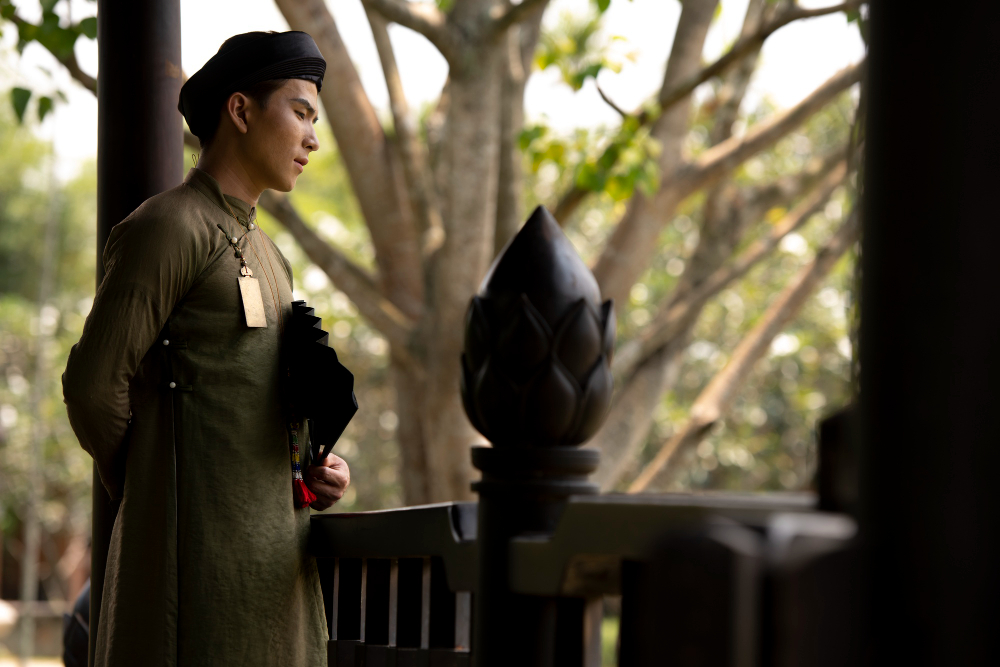
Kyoto’s temple hall is purposefully silent. Soft lighting, wooden floors, and the subtle scent of incense in the air. Then something moves, almost silently.
A small humanoid figure, clad in plain grey robes, advances with deliberate precision while making an unexpectedly familiar gesture with its hands pressed together. It stops, cocks its head slightly, and starts talking in a steady, soothing voice.
It’s not a monk. Not precisely. They refer to it as “Buddharoid,” and depending on who you ask, it’s either a thoughtful experiment or something a little eerie. Although it seldom makes a big deal out of it, loneliness has been a problem in Japan for years.
| Category | Details |
|---|---|
| Project Name | Buddharoid (AI Robot Monk) |
| Developer | Kyoto University |
| Lead Researcher | Seiji Kumagai |
| Field | AI, Robotics, Religious Technology |
| Purpose | Provide spiritual guidance, address loneliness |
| Technology | AI language models + humanoid robot (Unitree G1) |
| Capabilities | Conversational advice, prayer gestures, movement |
| Cultural Context | Aging population, declining number of monks |
| Ethical Concern | Role of AI in religion and human connection |
| Reference Source | https://www3.nhk.or.jp/nhkworld |
It manifests itself in more subdued ways, such as deserted rural homes, aging temples without heirs, and city apartments where neighbors hardly ever talk. The demographic reality of the nation is well known: fewer young people are entering traditional roles, such as religious life, and the population is declining.
This robot monk might be more interested in filling the void than in technology. The machine, which was created at Kyoto University, has been trained on enormous volumes of Buddhist texts. It can provide answers to queries about relationships, suffering, and anxiety—subjects that people are frequently reluctant to discuss with other people. When a journalist confessed to overanalyzing during a demonstration, the robot gently replied, recommending the practice of letting go of thoughts instead of chasing them.
The guidance was straightforward. Even familiar. However, hearing it from a machine alters the experience in ways that are difficult to pinpoint.
As you watch the exchange take place, there’s a point where doubt and curiosity collide. The robot moves slowly and deliberately, making almost theatrical gestures that seem to be intended to reassure. However, something about the lack of a face—or maybe the lack of real presence—remains in the background.
Whether people are reacting to the novelty or the wisdom is still unknown. Robotic companionship is nothing new in Japan. Compared to many other nations, this country has a more natural integration of machines into daily life, from robotic pets to elder care assistants. The notion that technology can coexist with emotion, even if it doesn’t completely replicate it, is accepted in society.
Religion, however, feels different. After all, temples are more than just educational facilities. They are places where people can connect with one another through rituals, quiet talks, and times of introspection led by someone who has experienced life, hardship, and aging. Even partially replacing that with a machine creates difficult-to-answer questions.
However, there is a real practical need. In Japan, a large number of temples are closing or running with few employees. Younger generations are less likely to become monks, preferring to work in more stable industries or cities. As a result, there is a sort of spiritual void that Buddharoid is supposed to fill, at least in theory.
Here, innovation seems to be motivated more by necessity than by ambition. In addition to speaking, the robot can move, bow, and make other gestures related to prayer. Its creators have gone to considerable measures to replicate presence as well as knowledge. It’s a different story entirely if that presence feels genuine.
A few guests lean slightly in as it speaks, seemingly intrigued. Some remain at a distance, observing with a wary look that implies they’re not entirely persuaded. It’s difficult to ignore the generational differences in reactions.
Older guests occasionally appear hesitant, possibly because they are more used to customs. Younger children who grew up with technology seem more receptive, or at the very least, more inquisitive. However, there is a fundamental question among them as well: is this simulation or comfort?
That distinction is important. After all, loneliness is more than just a lack of conversation. It has to do with not being understood. No matter how advanced, it’s still unclear if an AI can actually provide that.
Additionally, there is the ethical aspect, which is subtly present. What would happen to human relationships if people started depending on machines for emotional or spiritual support? Does it make loneliness go away, or does it just cover it up? Acknowledging this conflict, some researchers argue that technology should support human interaction rather than take its place.
However, boundaries tend to change over time, particularly in the field of technology. As it moves slowly through the temple, the robot answers inquiries and provides advice based on teachings that date back hundreds of years. The words themselves are unchanged. They have only been delivered by the voice.
Perhaps that is the most intriguing aspect. Buddhism has always placed a strong emphasis on detachment from the self and the notion that identity is malleable rather than fixed. Strangely, a machine imparting these lessons seems almost in line with that philosophy—devoid of prejudice and ego.
Or maybe that’s overanalyzing it. As this develops, it seems as though Japan is pushing the limits of human experience in addition to technology. Testing what is replicable, what is not, and what transpires in between.
The robot concludes its speech. Its hands stay firmly pressed together, motionless. The room is silent once more for a brief moment.