
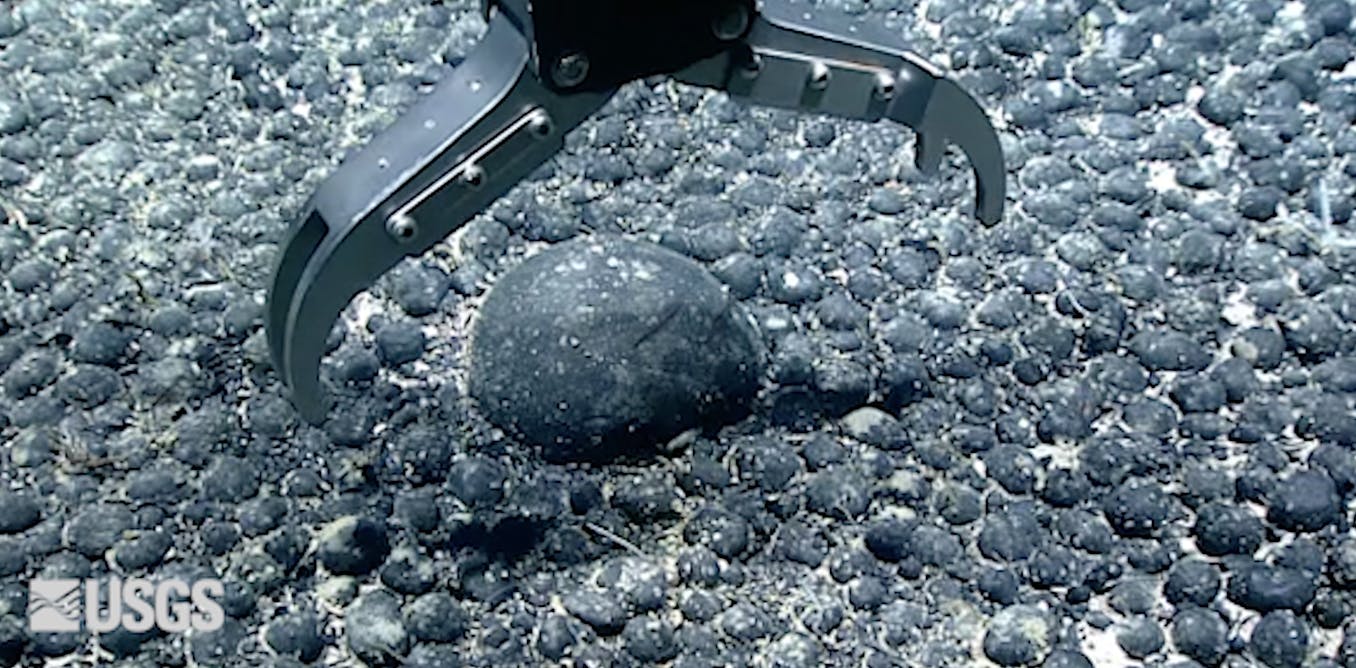
President Donald Trump’s April 2025 executive order on deep seabed mining has sparked international controversy by authorizing U.S. companies to extract critical minerals from areas beyond national jurisdiction. The order claims authority over polymetallic nodules containing valuable metals like nickel, manganese, and cobalt located on the international seabed, particularly in the Pacific Ocean’s Clarion Clipperton Zone. According to international law experts, this move challenges decades of ocean governance agreements that designate these resources as the common heritage of mankind.
The International Seabed Authority has condemned the unilateral action, stating that exploitation of resources belonging to all humanity is prohibited. Canadian mining company The Metals Company submitted an application through its U.S. subsidiary to mine the international seabed under American authorization shortly after the executive order was issued.
Understanding Deep Seabed Mining and International Law
Deep seabed mining targets polymetallic nodules scattered across the ocean floor in international waters. These potato-sized mineral deposits contain metals essential for electric vehicle batteries and modern technology. The Clarion Clipperton Zone, spanning approximately 1.7 million square miles southeast of Hawaii, represents one of the richest concentrations of these resources.
However, the legal framework governing these minerals has been established through international agreements. The Law of the Sea Convention, finalized in 1994, divided ocean resources into two categories: areas under national jurisdiction and international seabed areas known as “the Area.”
National Versus International Ocean Resources
Coastal nations control resources within their exclusive economic zones, extending 200 nautical miles from their shores. The United States enjoys one of the world’s largest such zones, covering over 4 million square miles, where it maintains full authority over mineral exploitation.
Meanwhile, the remaining seabed areas fall under international management by the International Seabed Authority. This organization has executed 31 exploration contracts with various countries and companies. The arrangement represents what negotiators called a “package deal” between national and shared ocean resources.
Despite helping architect the Law of the Sea Convention, the United States remains the only major industrialized nation that has not ratified the treaty. Nevertheless, the U.S. has historically recognized these rules as customary international law and respected the distinction between national and international seabed resources.
The 1980 U.S. Mining Statute
Trump’s executive order relies on a 1980 domestic statute originally enacted as interim legislation. The law authorized the National Oceanic and Atmospheric Administration to license exploration and permit commercial mining of polymetallic nodules outside U.S. jurisdiction. According to government records, four exploration licenses were initially issued, though two were relinquished in the 1990s.
Additionally, even Lockheed Martin, which holds the two remaining licenses, has historically considered them largely worthless without U.S. ratification of the international treaty. The company acknowledged that multibillion-dollar investments in deep seabed mining would require international legal certainty.
International Legal Questions
Legal scholars disagree on whether unilateral U.S. mining would violate international obligations. While the United States is not bound by the treaty it never ratified, questions remain about customary international law requirements. The report indicates that any of the 171 countries that have joined the convention could face legal action if they participate in U.S.-authorized mining activities.
Canada, home to The Metals Company, could potentially face scrutiny at the International Tribunal for the Law of the Sea in Hamburg, Germany. Other nations whose citizens or companies work with the mining firm on U.S.-authorized projects might similarly be exposed to legal challenges from treaty partners.
Broader Implications for Ocean Governance
In contrast to characterizations by NOAA Administrator Neil Jacobs, international law experts emphasize that minerals in the Area do not constitute a “domestic source” for the United States. The U.S. does possess critical minerals within its actual territory and exclusive economic zones, which legitimately qualify as American resources available for domestic exploitation.
However, the international seabed represents shared resources under a governance system the United States helped create. This framework has provided benefits to America through decades of maritime commerce, navigation rights, and resource security. Undermining these arrangements could weaken the broader rules-based international order.
The International Seabed Authority and member nations continue to monitor the situation as NOAA processes the mining application. Whether the U.S. will ultimately issue commercial permits under unilateral authority remains uncertain, though authorities have not confirmed specific timelines for decision-making on pending applications.
