
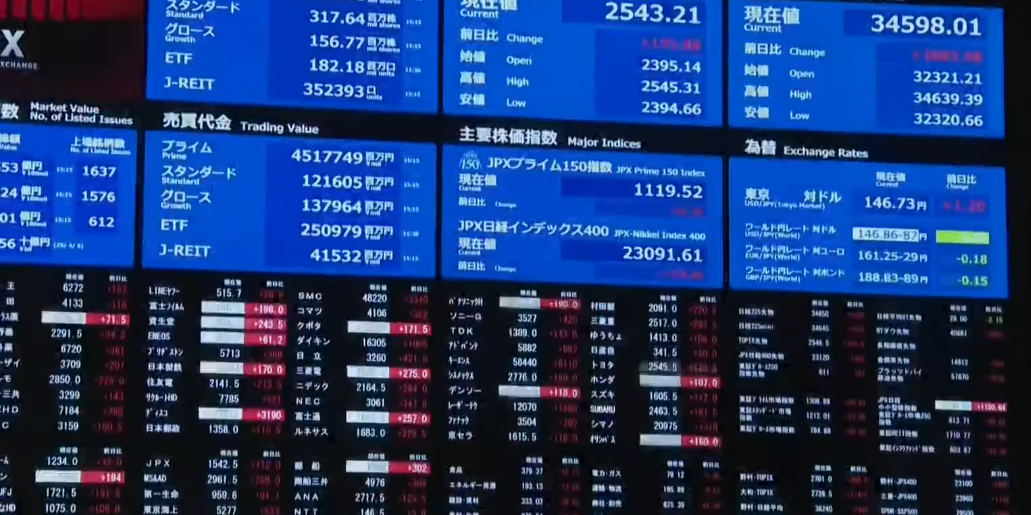
Tokyo still feels like Tokyo when you stand on the edge of Shinjuku Station on a Monday morning in late March 2026. Turnstiles, dark-suited salarymen checking phones, and a woman in gym clothes moving in the opposite direction through the same corridor are all examples of the crowds moving with practiced efficiency. The city is humming outside. However, the screens in the dealing rooms in Marunouchi and Nihonbashi, where Japan’s financial district works quietly and intently, tell a different tale. The Nikkei 225 began the day lower and continued to decline, reaching an intraday low of about 50,566, a decrease of more than 2,400 points from the previous close. By the afternoon, it had partially recovered to settle at 51,885.85. On the day, it was down almost three percent. From the fifty-two-week high of 59,332 earlier in the year, it is down about thirteen percent.
Since late February, everything has been driven by the immediate trigger. Now in its fifth week, the war between the United States and Iran is more than just a geopolitical conflict in a far-off place. This conflict directly affects Japan’s national balance sheet because the country imports almost all of its energy, depends on the Strait of Hormuz for a sizable portion of its crude oil supply, and its manufacturers need stable and reasonably priced energy to maintain their production economics. On Monday morning, the price of Brent crude reached $115.61 per barrel. It was trading at about $70 prior to the start of the war on February 28. The fifty-dollar swing in just a few weeks is not unusual for the market. Japan is better positioned than nearly any other major developed economy to experience this economic event.
In an effort to show that Japan’s economy can finally support positive nominal interest rates without collapsing, the Bank of Japan has been attempting to normalize monetary policy for months by gradually raising rates after decades of near-zero and negative rates. Already, that project was risky. It is now much more complicated due to the oil shock. According to a summary of opinions released on Monday, BOJ policymakers discussed the necessity of additional rate hikes at their March meeting. One member specifically warned that the central bank risked “unintentionally falling behind the curve” if second-round inflation effects from overseas—that is, price increases driven by oil spreading into wages, services, and domestic pricing—took hold before the BOJ could react. The irony is nearly overwhelming: Japan has been attempting to induce inflation for decades, and now inflation is coming from the exact source that most negatively impacts both corporate margins and domestic consumption at the same time: imported energy costs.
| Field | Details |
|---|---|
| Index | Nikkei 225 (NI225) — Price-weighted index of 225 top-rated Japanese companies on Tokyo Stock Exchange |
| Inception | 1950 |
| Currency | Japanese Yen (JPY) |
| March 30, 2026 Close | 51,885.85 — down 1,487.22 pts / -2.79% |
| Intraday Low (March 30) | 50,566.99 — a drop of over 2,400 points at session lows |
| Previous Close | 53,373.07 |
| 52-Week High | 59,332.43 |
| 52-Week Low | 30,792.74 |
| TOPIX (March 30) | 3,542.34 — down 2.94% |
| Brent Crude (March 30) | $115.61/barrel — monthly surge approaching record levels |
| WTI Crude | ~$102.19/barrel (+2.58%) |
| South Korea Kospi Drop | -5% (largest decliner in Asia on March 30) |
| Hang Seng Drop | -1.52% to 24,533 |
| Australia ASX 200 Drop | -1.46% |
| Bank of Japan Policy Signal | BOJ policymakers discussed need for further rate hikes amid rising oil-driven inflation; risk of falling behind the curve flagged |
| Key Geopolitical Trigger | U.S.-Israeli war with Iran (began Feb. 28, 2026) — Houthis fired missiles at Israel on March 28 (first direct involvement) |
| Expert Warning | Ajay Bagga: “Largest energy disruption in human history, with no off ramp in sight” — compared to 2007–2008 financial crisis |
| UN Response | Secretary-General Guterres formed task force to address Strait of Hormuz shipping disruptions |
| Reference 1 | CNBC — South Korea’s Kospi Leads Declines in Asia as Middle East War Enters Fifth Week |
| Reference 2 | Yahoo Finance — Nikkei 225 Index (^N225) Charts, Data & News |
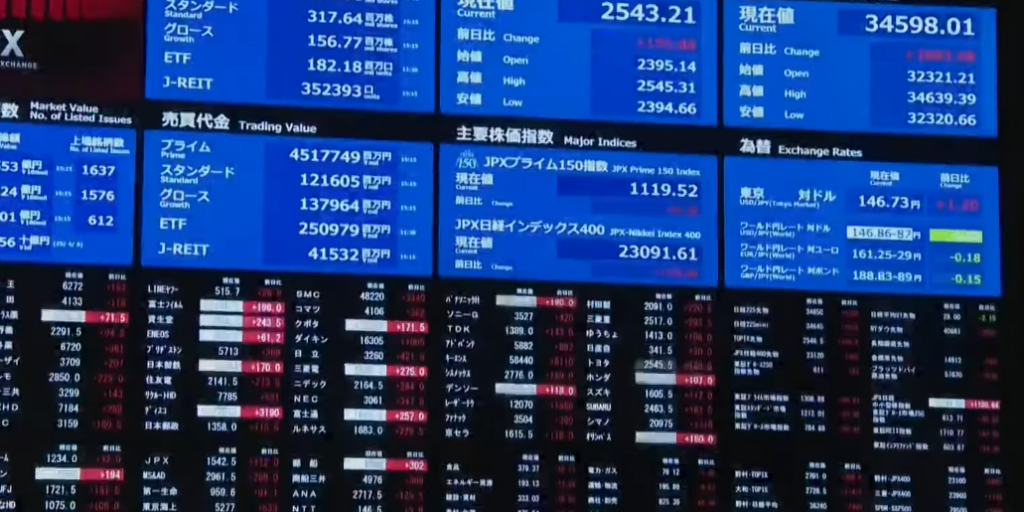
The severity of the situation was further highlighted by the larger Asia-Pacific picture. On the day, South Korea’s Kospi performed the worst in the region, falling more than five percent. The Kosdaq, which is dominated by smaller-cap and technology companies, fell by almost 4%. Hang Seng in Hong Kong saw a 1.52 percent decline. The ASX 200 in Australia dropped 1.46 percent. Even the Shanghai Composite, which is normally protected from the shock of the Middle East by China’s various energy supply chains and domestic policy levers, saw a slight decline. The story of the sell-off was not unique to Japan. It was acknowledged throughout the region that the fifth week of a conflict with no end in sight alters energy-importing nations’ economic calculations in ways that are not yet fully priced into any of these markets.
Ajay Bagga, a market expert, described the general anxiety in terms that are worth considering. He compared the possible interaction of these forces to the time that transformed the 2007 credit stress into the full-blown 2008 financial crisis, with a technology valuation bubble layered on top. He described three simultaneous crises: massive private credit exposure, an unprecedented global energy disruption, and bond markets struggling to price risks amid record debt levels, rising deficits, and weakening growth. Bagga may be exaggerating the systemic risk, and that is a purposefully frightening framing. However, it is more difficult to reject his argument’s structure, which holds that there are three convergent crises that interact in ways that no one fully comprehends.
The Nikkei’s 52-week range provides a unique perspective on the state of Japan’s markets this year. In August of last year, the yen carry trade unwound, causing one of the fastest single-day collapses in the index’s history and setting the low of 30,792. This past February, prior to the start of the war, the peak of 59,332 was attained. The remarkable volatility that has defined Japanese stocks over the last 12 months is captured by the difference between those two figures, which is close to 30,000 points, or a range of about 93%. Fundamentally speaking, companies like Toyota, Sony, SoftBank, and the big trading houses that comprise a sizable portion of the index are not in trouble. Their companies have not abruptly failed. The macroenvironment surrounding them has changed, and as of right now, it is heading in a way that makes conservative portfolio positioning appear far more appealing than it did during the February highs.
It is difficult to ignore the fact that the Nikkei’s current problems come at a unique point in Japan’s economic history. A Tokyo Stock Exchange that was calling for improved corporate governance, a Nikkei that was finally regaining ground, and a yen that was weakening in ways that benefited exporters even as it complicated household budgets were all signs of something truly new in the last two years, following thirty years of stagnation, deflation, and a stock market that spent years below where it had been in 1989. Not all of that story has been canceled. However, the oil shock, the Iran war, and the BOJ’s increasingly intricate calculations are all major obstacles on their own. When taken as a whole, they are sufficient to make even cautious optimism about Japan’s market recovery seem premature. The question is whether this is the start of something that will last far longer than the current diplomatic calendar indicates, or if it is a correction within a structural recovery, which is still quite possible.