
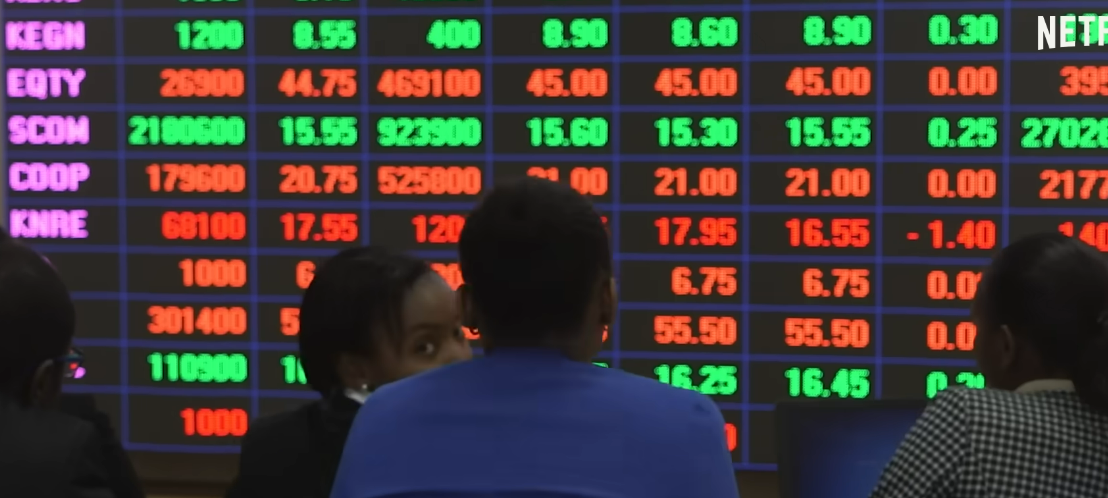
On a Friday afternoon when the week has gone poorly, the New York Stock Exchange’s trading floor exudes a certain tense, resigned efficiency, with traders closing out screens and wrapping up positions with the body language of people who have taken in more bad news than they can comprehend in five days. That quality was abundant during the week ending March 28, 2026. The S&P 500 experienced its longest losing streak in almost four years as it dropped for the fifth consecutive week. Along with the Nasdaq, which had crossed that threshold the day before, the Dow Jones also confirmed a correction. The S&P is currently 8.7% below its January all-time high. For Brent, oil settled above $105 per barrel. Intraday, the ten-year Treasury yield reached 4.48 percent before slightly declining. All of this took place in one week. Serious investors are currently wondering over the weekend whether this is the final correction or just the beginning of something that still has a long way to go.
It would be incorrect to act as though the Iran war wasn’t the clear catalyst. Prior to the start of the conflict on February 28, Brent crude was trading at about $70 per barrel. In less than a month, it has increased by about 50% to over $105. Approximately one-fifth of the world’s oil passes through the Strait of Hormuz, which is still under pressure. The diplomatic situation has demonstrated a remarkable ability to disappoint markets on a daily basis. Trump gave himself until April 6 to attack Iranian power plants. Iran did not show any signs of retreating. The worst-case scenario, according to Macquarie strategists, is that if the war lasts until the end of June, oil prices could hit $200 per barrel, setting a record by a wide margin and causing inflation in every sector of the economy that transports goods by truck, ship, or airplane—that is, the majority of the economy. The week was succinctly summed up by Doug Beath, global equity strategist at Wells Fargo Investment Institute: “The diplomatic dissonance between the U.S. and Iran dismayed investors.” By the end of the week, the fog of war had overcome risk appetite.
| Field | Details |
|---|---|
| Topic | Converging Market Risks and the Likelihood of a Further 10%+ Decline in 2026 |
| S&P 500 Current Drop From Peak | 8.7% below all-time high set January 2026 |
| Dow Jones Status | Confirmed correction — down 10%+ from recent record |
| Nasdaq Status | Confirmed correction — down 10%+ from all-time high |
| Consecutive Losing Weeks (S&P 500) | 5 straight — longest streak in nearly 4 years |
| Brent Crude Price (March 28, 2026) | $105.32/barrel — up from ~$70 before Iran war began |
| WTI Crude Price | $99.64/barrel — up 5.5% in single session |
| 10-Year Treasury Yield | 4.43–4.48% — up from 3.97% pre-war |
| Macquarie Oil Price Forecast (War to June) | Could reach $200/barrel — an all-time record |
| Private Credit Industry Size | ~$3 trillion |
| Private Credit Default Rate (Fitch, 2025) | Exceeded 9% among U.S. corporate borrowers |
| Apollo Redemption Request Cap | Received 11%+ redemption requests; capped at 5% quarterly |
| Blackstone Private Credit Fund | Met 100% of redemption requests (7.9% of $82 billion fund) |
| Goldman Sachs Private Credit Stress Estimate | 10% default rate would reduce GDP by only 20–50 basis points |
| Key Market Voice | Doug Beath, Wells Fargo: “Risk appetite could not withstand the fog of war” |
| Reference 1 | CBC News — Wall Street Marks Its Worst Week Since Start of Conflict in Iran |
| Reference 2 | The Globe and Mail — The Market Is Worried That Private Credit Is the Next Shoe to Drop |
However, despite its importance, the war did not start the market’s vulnerabilities. They were ignited by it. The dry wood had already been piled. Tech stocks had been trading at price-to-earnings multiples that required not only strong performance but also a kind of constantly improving perfection, a standard that was always going to be challenging to uphold and that many investors are now unable to defend in light of the Iran shock. The pre-war AI scare trade has now expanded from software to cybersecurity, logistics, and wealth management, with participants in each new industry questioning whether AI will reduce their earnings before any human ever chooses to. In a single session, Amazon dropped 4%. Meta experienced a 4% decline. Nvidia dropped two and a half. These companies are not in trouble. Even though they are among the most profitable businesses in history, their stocks are declining because the prices they were trading at in January contained assumptions about the future that the current environment consistently fails to support.
Then there is the issue of private credit, which has been quietly growing in a part of the financial system that even institutional investors find hard to understand and that the majority of retail investors are unaware of. Over the past 20 years, private credit has expanded to a nearly $3 trillion industry, primarily occupying the void left by mainstream banks’ tighter lending policies following the 2008 financial crisis. In an environment that has now become hostile, the biggest players—Apollo Global Management with $480 billion under management, Blackstone with $355 billion, Ares with $309 billion, and KKR with $242 billion—have made billions of loans, many of them to businesses with junk-rated debt. According to the rating agency Fitch, default rates among U.S. corporate borrowers in private credit surpassed nine percent in 2025. Smaller businesses and the software industry, which has been severely impacted by concerns about AI disruption, were primarily affected. Analysts at Morgan Stanley predict that direct lending defaults will increase from 5.6% to 8%. The collateral supporting certain private credit loan pools was recently marked down by JPMorgan Chase, which may restrict the amount of money these funds can borrow from the nation’s biggest bank or require them to post more collateral just when they most need liquidity.
It is important to keep a close eye on the redemption situation at a number of significant funds. Apollo is holding firm at a 5 percent quarterly cap despite receiving redemption requests totaling more than 11 percent of outstanding shares in its primary private credit fund. This means that more than 6% of investors who desired to withdraw were unable to do so. Blackstone took a different approach, fulfilling 7.9% of its $82 billion fund, or 100% of redemption requests. The difference in methodology is intriguing in and of itself, and it provides insight into how various institutions interpret the same event. There is a perception that funds that choose to meet full redemptions are placing a wager on stability, while those that limit withdrawals are placing a wager on confidence. Which wager turns out to be right is still up in the air.
By estimating that even a 10 percent private credit default rate—the level observed during the 2008 global financial crisis—would reduce GDP by only 20 to 50 basis points, Goldman Sachs has attempted to put a floor under the systemic fear. That is a significant assurance, and it’s likely true that private credit by itself won’t cause a collapse similar to the one that occurred in 2008. Roughly 9% of all corporate borrowing comes from private credit, which does not hold the same market share as subprime mortgage lending prior to its collapse. The financial system is not in danger of collapsing due to private credit. It is a secondary pressure point that coincides with rising Treasury yields, a tech valuation correction, an oil shock, and worsening consumer sentiment.
There is a sense that the market is not so much in the middle of a correction as it is in the early stages of a story that hasn’t yet revealed how it will end when all of this converges over the course of a single month. In the past, the S&P 500 has experienced a monthly decline of ten percent or more approximately once every seven to ten years. This month was no exception. There is a correction in the Dow. The Nasdaq has made a correction. Before the war, the ten-year yield was 3.97 percent. Since then, it has increased to levels that make future earnings less valuable in today’s calculations and make mortgage rates more punitive for already struggling households. The president of Bianco Research, Jim Bianco, made a perceptive statement that had some weight on trading desks: anything Trump says at this point is just white noise; markets won’t move significantly unless Iran claims the negotiations are going well. The market’s experience over the last five weeks of witnessing diplomatic signals whipsaw prices without any resolution is reflected in that assessment, despite its bluntness.
A ceasefire announcement or an unanticipated softening from Tehran could be the catalyst for the next big market move. Sharp, war-driven selloffs can swiftly reverse once a geopolitical resolution emerges, according to history. Less than a year ago, the S&P 500 fell about 12% in a week before rising 40% over the next nine months. Sometimes unexpected floors are found in markets that appear destined for further declines. However, the Iran war did not create the underlying vulnerabilities, which will persist even after it is over. These vulnerabilities include stretched tech valuations, private credit stress, rising oil and inflation, and a bond market driving yields higher. Before the match was struck, the kindling was present. The daily war headlines tend to hide that aspect of the current situation.